Moroccan Rug Buying Guide: 7 Things to Know Before You Order Online (2026 Edition)
Buying a Moroccan rug online means committing to a piece you’ve only seen in photos — often a significant investment in a handmade item shipped from thousands of miles away. As we move through 2026, the online marketplace for home décor is bigger than ever, but buying a genuine artisanal piece requires a different approach than buying mass-produced furniture. It’s a bigger leap of faith, and it’s completely reasonable to want absolute clarity before you click “order.”

This guide walks through the seven essential things worth understanding before you buy: how to verify authenticity, how sizing actually works for handwoven pieces, what a good product listing should tell you, what to expect from international shipping, return policies, pricing, and how to choose between rug styles. By the end, you’ll know exactly what to look for — and what questions to ask if that information is missing.
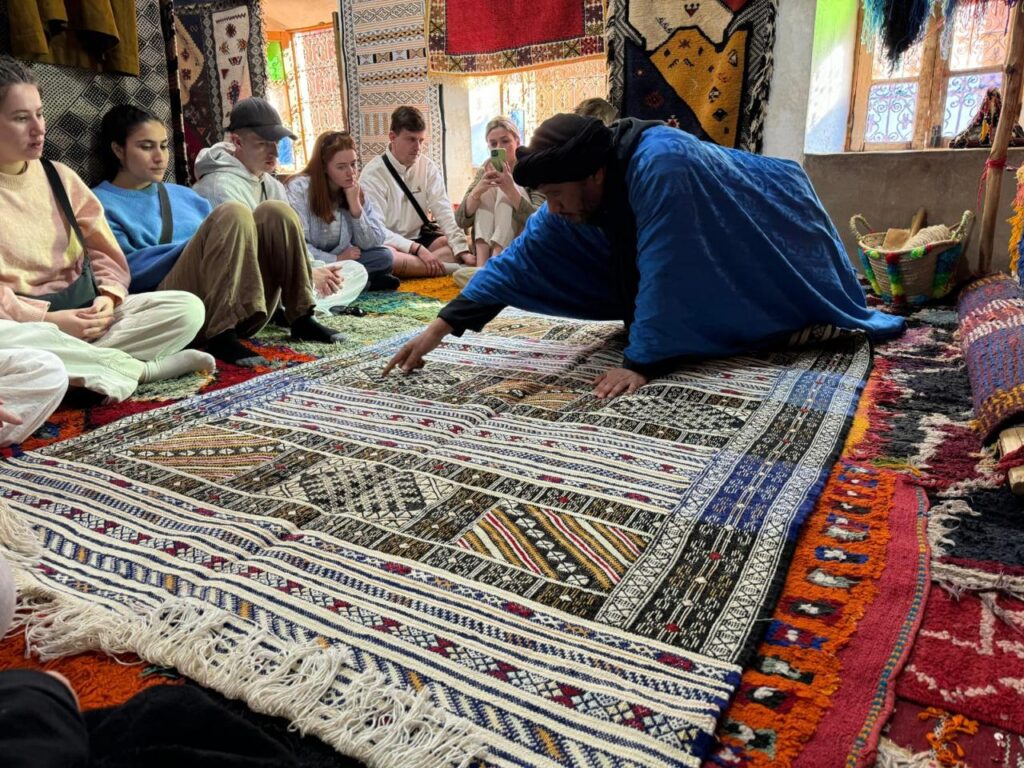
Table of Contents

  1. Verify Authenticity Before You Buy
  2. Understand How Sizing Works for Handwoven Rugs
  3. Know How to Read a Product Listing
  4. Understand Shipping and Delivery Timeframes
  5. Check the Return and Exchange Policy
  6. Know What Affects the Price
  7. Choose the Right Style for Your Space
  • FAQ

1. Verify Authenticity Before You Buy

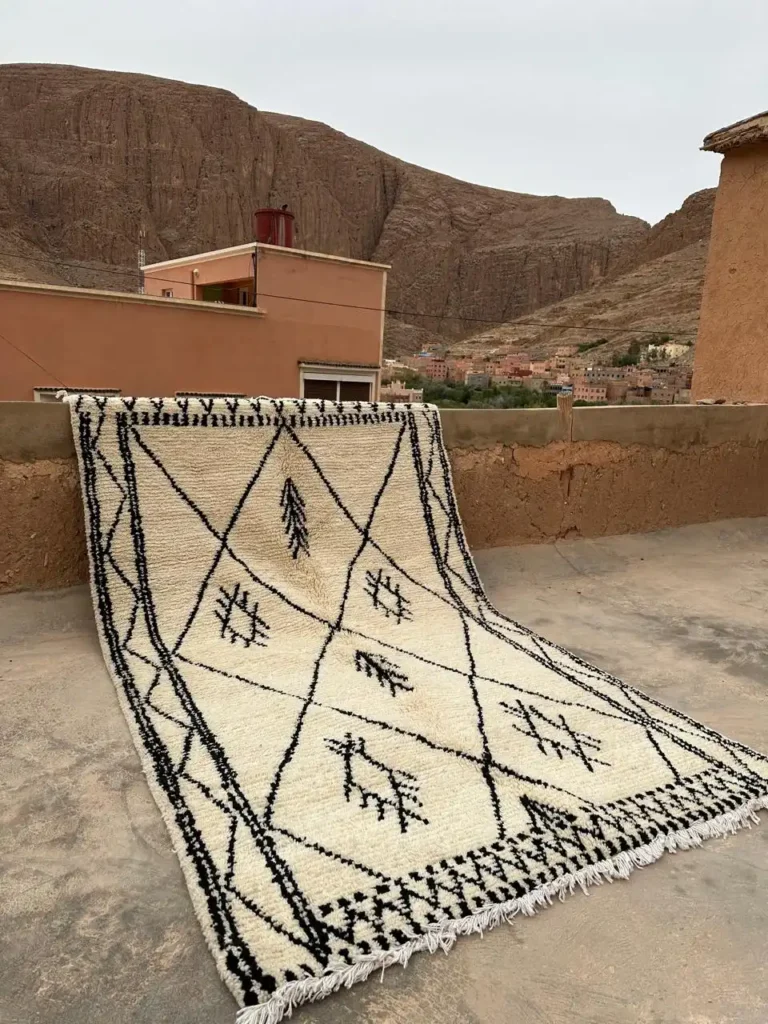
The single biggest concern with buying a Moroccan rug online is making sure it’s genuinely handwoven by artisans, not a machine-made imitation from a factory. A few visual signs separate the real thing from a knockoff: irregular knots, slight asymmetry on the back of the rug, and natural (not perfectly uniform) coloring. Additionally, genuine Moroccan rugs feature fringes that are a natural extension of the warp threads, whereas fake rugs often have fringes sewn on as an afterthought.

A trustworthy seller will be fully transparent about where and by whom the rug was made. Look for listings that mention the specific weaving region or tribe (like the Middle Atlas or High Atlas mountains) and the materials used (such as live sheep’s wool). Ideally, the shop should provide close-up, high-resolution photos of the back of the rug, where the hand-knotting process is most visible. If a listing is vague or only shows highly edited studio photos with no texture detail, step back. For a deeper dive, read our full guide on how to tell if a Moroccan Berber rug is authentic.

2. Understand How Sizing Works for Handwoven Rugs

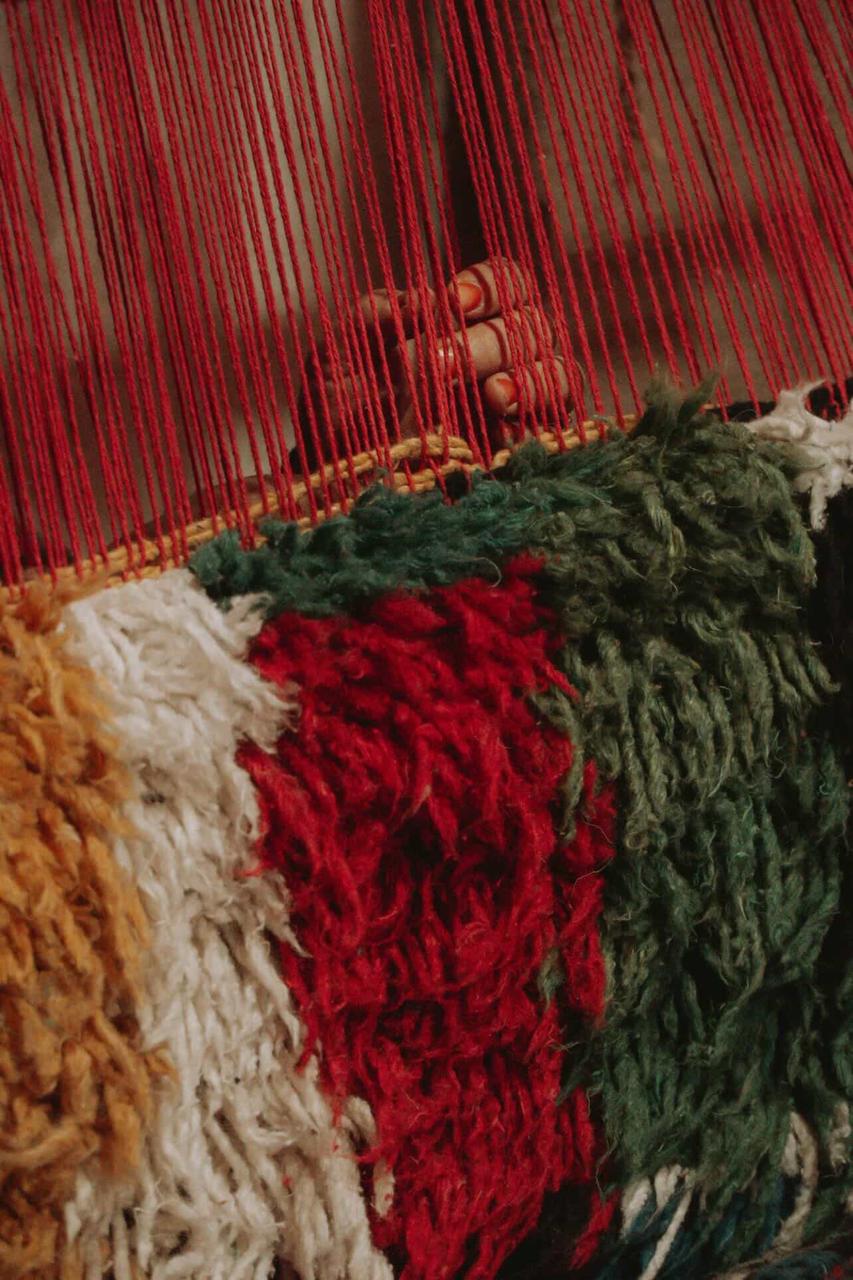
Because handwoven rugs are made on a traditional wooden loom by hand rather than cut by a laser to a machine-exact size, the dimensions listed can vary slightly. The width of a genuine rug is dictated by the weaver’s loom, and the tension of the wool can shift naturally during the weaving process.

A rug listed as 8′ x 10′ might measure 7’10” x 10’2″ once it’s off the loom and washed. This slight variation is completely normal; it is not a flaw. In fact, it is one of the clearest signs that a rug is genuinely handmade rather than mass-produced. Before ordering, measure your space and decide on a size range rather than one exact number. Choose a seller who is upfront about this natural variation. If you aren’t sure where to start, check our guide on what size rug you need for your specific room layout.
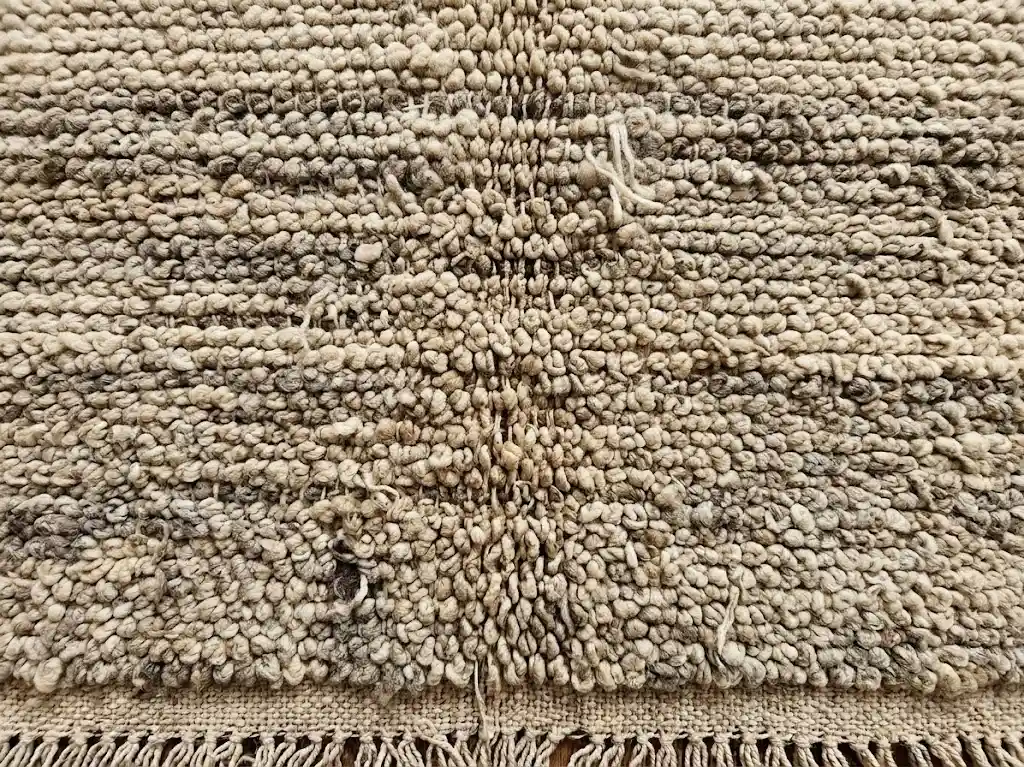
Back of a handwoven Berber rug showing authentic hand-knotting

3. Know How to Read a Product Listing

A complete, trustworthy product listing should act as a virtual salesperson, answering your questions clearly. When evaluating a rug online, look for these specific details:

  • Material: Is it made from 100% natural live wool, recycled fabric, or a wool-cotton blend?
  • Dimensions: Are the exact measurements provided in both feet/inches and centimeters?
  • Origin: Where was it made, and by which weaving tradition (e.g., Beni Ourain, Boujad, Azilal)?
  • Age: Is it newly woven, or is it a vintage piece? Vintage pieces will often have beautiful, natural fading and softer pile.
  • Condition: If vintage, are there any repairs or restorations noted?

If any of this information is missing, do not hesitate to reach out to the seller directly before ordering. A legitimate handmade rug business will be eager and able to answer highly specific questions about materials and origin.

4. Understand Shipping and Delivery Timeframes

International shipping is one of the most common hesitations buyers face, especially when ordering directly from Morocco. Fortunately, global logistics have vastly improved. Look for sellers who partner with top-tier established carriers — DHL Express international shipping is the gold standard for reliable, fast rug transit — and who provide real-time tracking, insurance coverage, and signature confirmation upon delivery.

Reasonable delivery windows for international rug shipping typically fall between 5 and 10 business days, though this can vary slightly by destination. It is also important to check if the seller covers export taxes and if you will be responsible for any local customs duties upon import. Ensure the listing or checkout process clearly states an estimated delivery window before you complete your transaction.

5. Check the Return and Exchange Policy

Because each handwoven rug is an irreplaceable one-of-a-kind piece, return policies often work a little differently than standard big-box retail. Navigating consumer protections for online purchases internationally means you should always check the seller’s terms before ordering:

  • Is there a return window, and how long is it (e.g., 14 or 30 days)?
  • Who covers the return shipping costs for international freight?
  • Are returns accepted for “change of mind,” or only for structural damage/defects?
  • Are there restocking fees?

A clear, plainly written policy — not just a vague “contact us” form — is the mark of a confident seller who stands behind their craftsmanship. If you have questions about sizing or how a color will look in your specific room’s lighting, ask them before ordering rather than relying solely on the return policy as a safety net.
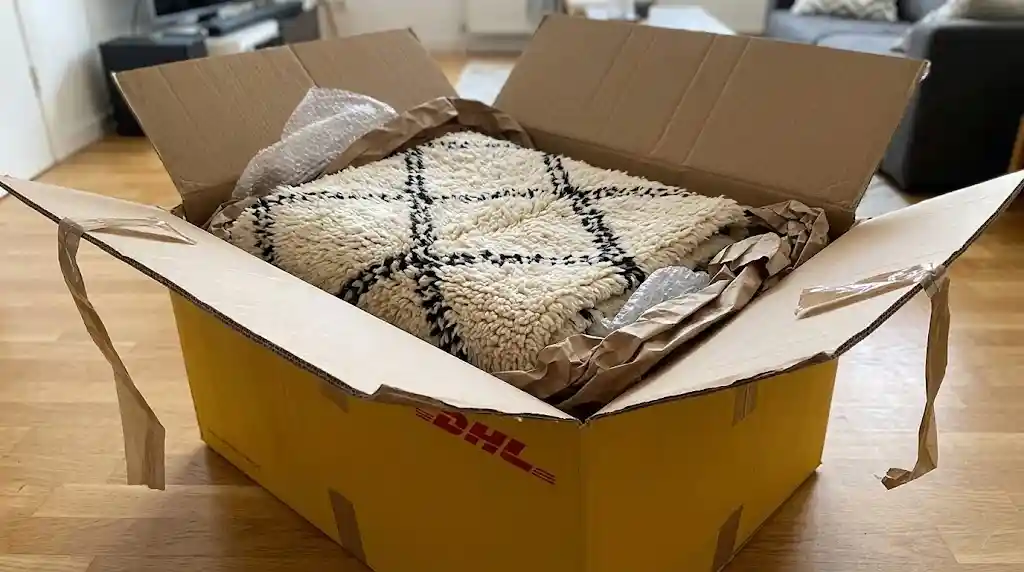
Unboxing a Moroccan rug delivered via international DHL shipping

6. Know What Affects the Price

Handwoven rug pricing isn’t arbitrary, and the cheapest option is rarely the best value. Several concrete factors consistently affect cost:

  • Size: Larger rugs require exponentially more wool and months of extra weaving time.
  • Knot Density: A tighter, denser weave takes much longer to produce and yields a heavier, more durable rug.
  • Wool Quality: Hand-spun, live sheep’s wool sourced from the Atlas Mountains costs more than processed, chemically treated wool.
  • Dyes: Natural plant-based dyes (saffron, indigo, henna) are labor-intensive compared to synthetic chemical dyes.

Understanding this helps you compare listings fairly. A small, flatwoven Kilim and a massive, thick-pile Beni Ourain will naturally sit at very different price points. A much lower price on a seemingly identical rug from another seller warrants a closer look at the knot density and material quality before assuming it’s simply a better deal.

7. Choose the Right Style for Your Space

Finally, before ordering, it helps to narrow down which specific style fits your room and lifestyle. Are you looking for a neutral, thick-pile foundation for a minimalist space? A flatwoven, easy-to-clean piece for a high-traffic dining room? Or a bold, colorful statement piece to anchor an eclectic living room?

Knowing your aesthetic goals and room dimensions helps filter a massive online catalog down to a handful of realistic options. To make this decision easier, check out our Beni Ourain, Kilim, or Boucherouite-style comparison to find your perfect match.

FAQ — Frequently Asked Questions

Is it safe to buy a Moroccan rug online? Yes, as long as the seller is transparent about materials, origin, and sizing, offers tracked international shipping, and has a clear return policy. Checking these details before ordering significantly reduces the risk of a high-ticket online purchase.

How can I tell if an online Moroccan rug seller is legitimate? Look for detailed product listings with close-up photos showing the back of the rug, clear information about materials and weaving region, and direct contact options for questions before you buy.

How long does international shipping take for a Moroccan rug? Most international rug shipments, especially via DHL Express, arrive within 5 to 10 business days, though this can vary depending on your destination and local customs processing.

Why might my rug’s dimensions be slightly different from what was listed? Handwoven rugs are made by hand on a loom, not cut by machine, so a few inches of variation from the listed dimensions is normal and is actually a sign of authentic craftsmanship.

What should a good Moroccan rug return policy include? A clear return window, transparency about who covers return shipping costs, and clarity on whether returns are accepted for any reason or only for damage or defects.

Why do similar-looking Moroccan rugs have very different prices? Price is driven by size, knot density, wool quality, and whether the piece is new or vintage — not just appearance. Two similar-looking rugs can have genuinely different production costs and material quality behind them.

Conclusion

Buying a Moroccan rug online doesn’t have to feel like a gamble. Once you know exactly what to check — authenticity signs, realistic sizing expectations, complete product listings, shipping transparency, clear return policies, fair pricing logic, and the right style for your space — the decision becomes incredibly straightforward. The right seller will make all of this information easy to find before you ever have to ask. Once your new rug arrives, be sure to review how to clean and care for your rug so it remains a treasured heirloom for decades to come.

Ready to Find Your Perfect Piece?

Browse our full collection of authentic, handwoven Moroccan rugs, or check our FAQ page for more specific details on shipping, sizing, and returns.
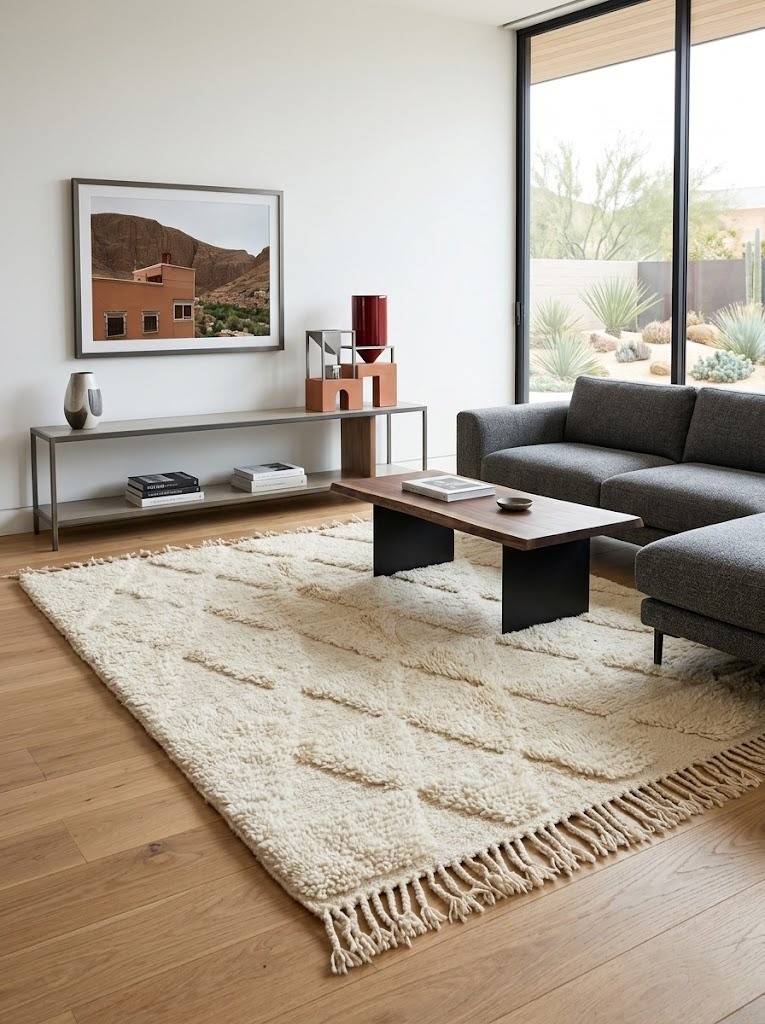
Best Moroccan Rugs for Scandinavian and Minimalist Interiors (2026 Edition)

Scandinavian design and Moroccan rugs might seem like an unlikely pairing at first glance — one is defined by strict architectural restraint, the other by deep texture and tribal pattern. Yet, it has become one of the most natural, enduring style combinations in interior design today. Walk through any professionally styled minimalist living room, and there is a very good chance a handwoven Moroccan rug is doing the quiet, essential work of warming up the space.

The reason this pairing works so seamlessly comes down to contrast and balance. In this guide, we will explore exactly why Moroccan rugs — Beni Ourain styles in particular — fit so naturally into Scandinavian and minimalist interiors. We’ll also share expert styling tips, common pitfalls to avoid, and recommend specific pieces from our collection that bring this elevated look to life.

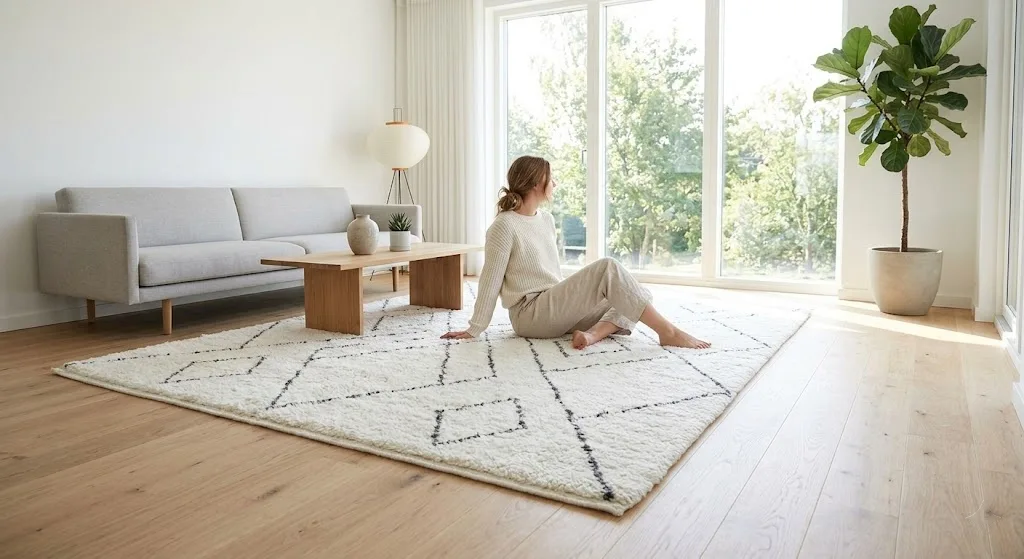
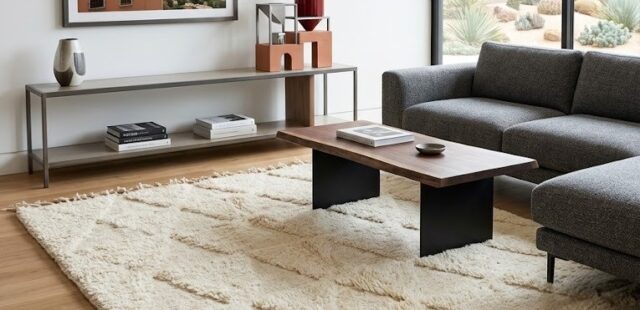
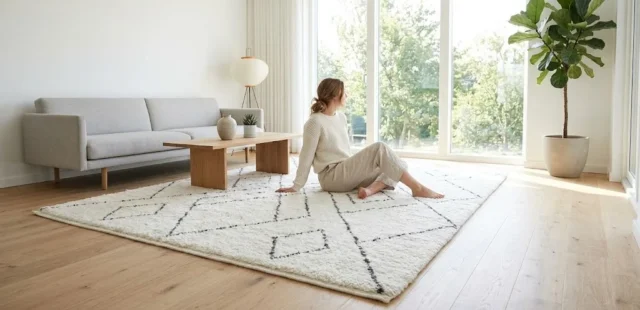
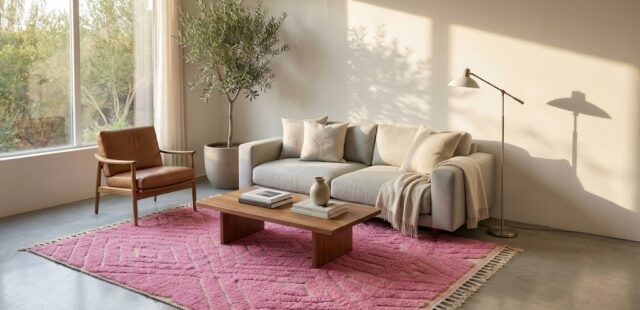
Beni Ourain rug styled in a minimalist Scandinavian living room

Table of Contents

  • Why Moroccan Rugs Work in Minimalist Spaces
  • The Case for Beni Ourain
  • Styling Tips for a Minimalist Room
  • What to Avoid in a Minimalist Space
  • Our Top Picks for 2026
  • FAQ

Why Moroccan Rugs Work in Minimalist Spaces

Scandinavian design is built on clean lines, light wood, neutral palettes, and strictly uncluttered rooms. However, when taken too far, that visual restraint can start to feel cold, flat, or overly sterile. This is exactly the design gap a handwoven Moroccan rug fills.

The thick, organic texture of hand-knotted wool brings warmth and tactile interest into a room without adding chaotic visual noise. Because the colors remain neutral and the geometric patterns are remarkably simple, the rug acts as a grounding element rather than a distraction.

This concept is deeply rooted in the idea of hygge, the Danish concept of coziness and comfort within simplicity. A soft, plush wool rug underfoot—especially one carrying the slight irregularities and soulful warmth of a handmade piece—is one of the most effective, direct ways to introduce inviting warmth into a rigid minimalist room.

The Case for Beni Ourain

If there is one specific Moroccan rug style engineered for this exact aesthetic, it is the Beni Ourain. Characterized by natural, undyed ivory wool and restrained black or brown geometric lines, it never competes with a room’s carefully curated color palette. Instead, it becomes a seamless part of the neutral foundation, much in the same way a slab of natural stone or a piece of raw timber would.

This foundational quality is precisely why visionary modernist architects incorporated Le Corbusier’s use of Beni Ourain rugs into some of their most iconic interiors decades before “Scandinavian style” became a mainstream global trend. The same minimalist logic—the inherent human need for organic texture set against clean, rigid geometry—applies just as strongly in 2026.

Styling Tips for a Minimalist Room

To execute this pairing flawlessly, follow these practical interior design guidelines:

  • Let the rug be the texture, not the color. Keep walls, furniture, and large surfaces distinctly neutral—think crisp white, warm cream, soft gray, and light ash wood. Allow the rug’s thick wool texture and subtle tribal pattern to provide the primary visual interest in the room.
  • Pair with natural materials. Washed linen, raw wood, woven rattan, and matte stoneware all sit beautifully alongside a Beni Ourain rug because they share the same handmade, organic, and unpolished quality.
  • Leave breathing room. Minimalist spaces rely heavily on negative space. Don’t crowd the rug with too much furniture or floor-level decor. Let it anchor the room with visible hardwood framing it, rather than disappearing entirely under clutter.
  • Keep accent colors muted. If you wish to introduce a pop of color, choose one or two muted, earthy tones—such as sage green, washed terracotta, or soft ochre—in a throw blanket or cushion, rather than introducing jarring, highly saturated primary colors.

What to Avoid in a Minimalist Space

Even the most beautiful rug can pull a minimalist room out of balance if styled incorrectly. Avoid these common mistakes:

  • Avoid layering multiple bold patterns. A Beni Ourain’s simple geometric lines work specifically because they are usually the only pattern in the room. Adding a busy patterned sofa, wallpaper, or heavily detailed curtains alongside it creates visual competition.
  • Don’t oversize the rug pattern relative to the room. In smaller, compact spaces, choose a piece with finer, more delicate geometric lines. A massive, oversized diamond motif can easily overwhelm a small room and make it feel cramped.
  • Skip overly saturated colors for the base rug. Save vibrant, highly saturated pieces for accent placements. If you are debating between styles like Beni Ourain vs Kilim vs Boucherouite, remember that colorful Boucherouite rugs function better as small layered accents or wall hangings in a minimalist setting, rather than as the room’s primary floor covering.

Our Top Picks for 2026

If you are looking to curate this aesthetic in your own home, here are a few standout pieces from our collection that capture the minimalist look perfectly:

  • Authentic Handwoven Beni Ouarain Berber Rug — The quintessential, foolproof choice: thick ivory wool with classic black geometric lines. This is the ultimate foundation piece for any Scandinavian-inspired living room.
  • Rosy Beni Ouarian Berber Rug — A softer, subtly warmer variation ideal for minimalist bedrooms or reading nooks, where a slightly warmer undertone works beautifully against white linen and light oak wood.
  • Taznakht Wool Berber Rug — For those who want a touch more intricate pattern detail while still strictly adhering to a neutral, minimalist-friendly color palette.

Each piece is hand-knotted by skilled artisans using natural, undyed wool. This means no two rugs are exactly alike — a quiet, bespoke detail that perfectly complements the intentional spirit of Scandinavian design.

FAQ — Frequently Asked Questions

Why do Moroccan rugs work well in Scandinavian interiors? Their thick, natural wool texture adds vital warmth and tactile interest to minimalist rooms without disrupting the neutral color palette or clean architectural lines that define Scandinavian style.

Which Moroccan rug style is best for a minimalist home? Beni Ourain rugs, characterized by their undyed ivory wool and simple black or brown geometric lines, are widely considered the classic choice for minimalist and Scandinavian interiors.

Can I add a colorful Moroccan rug to a minimalist room? Yes, but it works best as a small, layered accent rather than the room’s primary rug. This keeps the overall palette restrained and avoids visual competition with your minimalist decor.

What furniture pairs well with a Beni Ourain rug? Light wood (like ash, oak, or birch), linen upholstery, woven rattan, and matte stoneware all complement the organic, handmade texture of a Beni Ourain rug exceptionally well.

Is a Beni Ourain rug too plain for a statement room? Not at all — its simplicity is exactly what makes it so versatile. The rich texture and slight irregularity of the handwoven wool provide more than enough visual interest on their own, negating the need for bold, overwhelming colors.

Conclusion

The enduring pairing of Scandinavian minimalism and Moroccan craftsmanship works because the two styles perfectly balance one another: clean lines desperately need warmth, and organic warmth benefits from architectural structure. A handwoven Beni Ourain rug brings exactly that equilibrium into a room, adding profound texture and history without ever disrupting the calm, uncluttered atmosphere that defines minimalist design. Once you’ve selected your perfect piece, be sure to read our guide on how to clean and care for your Beni Ourain rug to ensure it lasts a lifetime.

Ready to Transform Your Space?

Bring that timeless warmth into your own home. Explore our curated Beni Ourain collection of authentic, handwoven rugs, complete with free DHL shipping worldwide.

Beni Ourain vs Kilim vs Boucherouite: Which Moroccan Rug Style Fits Your Home?

Walk into any conversation about Moroccan rugs and three names come up constantly: Beni Ourain, Kilim, and Boucherouite. They’re all handwoven by Berber artisans, all rooted in the same Atlas Mountains tradition, and yet they couldn’t look more different from one another. One is a plush ivory rug with minimalist black lines. Another is a flat, colorful geometric weave. The third is a riot of recycled fabric scraps woven into something completely unique.

If you’ve been scrolling through rug categories trying to figure out which one actually belongs in your home, this guide breaks down the real differences — construction, color, durability, and which rooms each one suits best — so you can choose with confidence instead of guesswork.

Table of Contents

  • Beni Ourain: The Minimalist Classic
  • Kilim: The Flatwoven Workhorse
  • Boucherouite: The Colorful Statement Piece
  • Side-by-Side Comparison
  • Which One Fits Your Interior Style?
  • Can You Mix Styles in One Home?
  • FAQ

Beni Ourain: The Minimalist Classic

Beni Ourain rugs come from the Beni Ourain tribes of the Middle Atlas Mountains and are arguably the most recognizable Moroccan rug style in the world — the rug you’ve seen under coffee tables in nearly every minimalist or Scandinavian-style interior on Pinterest. They’re hand-knotted with a deep, plush pile from thick natural sheep’s wool, traditionally left undyed in its natural ivory or cream tone, with bold black or brown geometric lines running across the surface.

  • Construction: Hand-knotted, thick pile, made for warmth — these rugs were originally designed to insulate tents against harsh mountain winters.
  • Best for: Minimalist, Scandinavian, and modern interiors where the rug acts as a soft neutral foundation rather than a bold statement.
  • Keep in mind: The light, undyed wool shows dirt and scuff marks more visibly than darker rugs, so they suit lower-traffic rooms like bedrooms and formal living rooms better than busy entryways.

Kilim: The Flatwoven Workhorse

Kilim rugs are flatwoven rather than knotted — instead of individual knots creating a pile, the wool is woven in interlocking horizontal threads, producing a thinner, more durable, and often reversible textile. Originally made by nomadic tribes who needed rugs light enough to pack and carry, and reflecting traditional nomadic weaving practices, Kilims feature bold geometric patterns in warm, saturated colors: deep reds, indigo blues, ochre, and saffron gold.

  • Construction: Flatwoven, no pile, lightweight and highly durable.
  • Best for: High-traffic areas like hallways, dining rooms, and kitchens, where a thick pile would wear down faster and chairs need to slide easily.
  • Keep in mind: Because Kilims have no pile, they offer less cushioning underfoot than a Beni Ourain, but that same flat structure makes them far easier to clean and more resistant to wear.

Boucherouite: The Colorful Statement Piece

Boucherouite — meaning “torn garment” or “scrap” — is the most unconventional of the three. Rather than wool alone, these rugs are hand-woven from recycled fabric scraps, leftover yarns, and textile remnants, a tradition that emerged when Berber women began experimenting with whatever materials were available. The result is bursting with color, asymmetry, and improvised pattern work that no two pieces ever repeat.

  • Construction: Hand-loomed from recycled fabric and wool scraps, giving it a tufted, textured surface.
  • Best for: Bohemian, eclectic, or maximalist interiors looking for a true one-of-a-kind statement piece, often used as an accent rug rather than covering a full room.
  • Keep in mind: The varied, often unconventional materials mean care should lean gentle and low-moisture, similar to other handwoven wool pieces, and these rugs work best as a focal accent rather than in heavy daily foot traffic.

Side-by-Side Comparison

FeatureBeni OurainKilimBoucherouite
ConstructionHand-knotted, thick pileFlatwoven, no pileHand-loomed, rag-style
Color paletteIvory/cream with black or brownWarm, saturated reds/blues/goldsBold, varied, eclectic
Best roomBedroom, formal living roomHallway, dining room, kitchenAccent in eclectic spaces
DurabilityModerate (shows dirt easily)High (durable, easy to clean)Moderate, accent use
Interior styleMinimalist, ScandinavianBohemian, traditional, transitionalBohemian, maximalist

Which One Fits Your Interior Style?

If your home leans toward clean lines, neutral palettes, and a calm, uncluttered feel, a Beni Ourain rug will slot in effortlessly as a soft, textural anchor without competing with anything else in the room.

If you need something for a busy, lived-in space — a hallway, a kitchen, a dining room — a Kilim gives you the color and pattern of a Moroccan rug with the practicality to handle daily wear.

If your style is more expressive, layered, and full of personality, a Boucherouite brings a genuinely one-of-a-kind piece of wearable art into the room, the kind of rug that becomes a conversation starter on its own.

Can You Mix Styles in One Home?

Absolutely, and many of the best-styled homes do exactly that. A neutral Beni Ourain in the living room, a Kilim runner in the entryway, and a small Boucherouite accent (or other tribal weaves like Glaoui, Taznakht, or Sabra) thrown over a reading chair or layered on top of a larger neutral rug is a layout that works because each piece is doing a different job in a different room. The shared thread connecting all of it is the handwoven, Atlas Mountains craftsmanship — the styles complement rather than compete with each other.

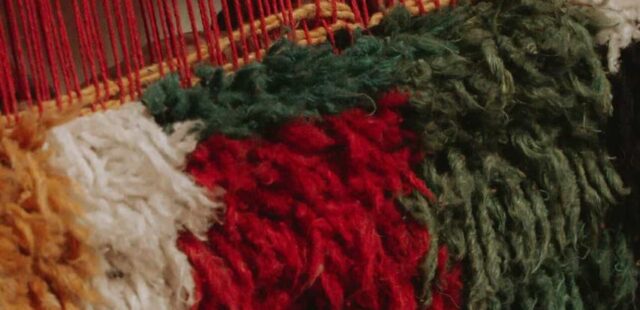
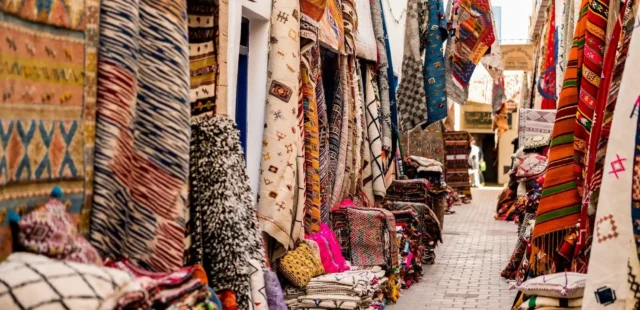
Bohemian eclectic interior with layered colorful Moroccan rugs, Azilal patterns, plants and global textiles

FAQ — Frequently Asked Questions

What is the difference between Beni Ourain and Kilim rugs?

Beni Ourain rugs are hand-knotted with a thick, plush pile in neutral ivory and black tones, while Kilim rugs are flatwoven with no pile, featuring bold, saturated colors and patterns. Kilims are generally more durable for high-traffic areas.

Is Boucherouite the same as Beni Ourain?

No. Boucherouite rugs are made from recycled fabric scraps and yarns rather than pure wool, producing a colorful, textured, one-of-a-kind rug, while Beni Ourain rugs are knotted from natural sheep’s wool in a consistent neutral palette.

Which Moroccan rug is best for a high-traffic area?

Kilim rugs are the most practical choice for hallways, kitchens, and dining rooms thanks to their flat, durable weave that resists wear and is easier to clean than a thick-pile rug.

Which Moroccan rug works best in a minimalist home?

Beni Ourain rugs, with their neutral ivory background and simple geometric lines, are the classic choice for minimalist and Scandinavian-style interiors.

Can I use a Boucherouite rug in a busy household?

Boucherouite rugs are best used as accent pieces rather than in constant heavy foot traffic, since the varied recycled materials benefit from gentler, less frequent use than a wool Kilim.

Are Beni Ourain rugs more expensive than Kilim or Boucherouite rugs?

Pricing varies by size, age, and density of weave rather than style alone, though the thick, labor-intensive pile of a Beni Ourain often places it at a comparable or higher price point than a flatwoven Kilim of similar size.

Conclusion

There’s no single “best” Moroccan rug style — only the one that fits the room you’re styling and the look you’re after. Beni Ourain brings calm, neutral texture to minimalist spaces. Kilim brings color and durability to busy, high-traffic rooms. Boucherouite brings personality and one-of-a-kind character to eclectic interiors. Once you know what each one does best, the decision usually makes itself. If you’re ready to take the next step, check out our guide on what size rug do you need to ensure a perfect fit.

Ready to Find Your Match?

Explore our Beni Ourain, Kilim, and full Moroccan rug collections — each piece handwoven by skilled artisans, with free DHL shipping worldwide.

What Size Moroccan Rug Do I Need? A Room-by-Room Guide

Moroccan rug sized correctly under a dining table with chairs pulled out

Picking the right size is, by far, the question we hear most from people shopping for their first handwoven Moroccan rug. It makes sense — these are investment pieces, often the focal point of a room, and getting the size wrong can make even the most beautiful rug feel off. A rug that’s too small floats awkwardly in the middle of the floor; one that’s too large overwhelms the furniture around it.

The good news is that sizing a rug isn’t guesswork once you know the basic rules. In this guide, we’ll walk through how to measure your space, the right sizes for living rooms, bedrooms, hallways, and dining rooms, and one thing that’s specific to handwoven rugs that most generic sizing guides don’t mention: a small amount of size variation is completely normal, and it’s part of what makes the piece genuinely handmade.

Table of Contents

  • How to Measure Your Space First
  • Living Room Rug Sizes
  • Bedroom Rug Sizes
  • Hallway and Entryway Runners
  • Dining Room Rug Sizes
  • Why Handwoven Rugs Don’t Come in “Exact” Standard Sizes
  • Layering a Smaller Rug Over a Larger Space
  • FAQ

How to Measure Your Space First

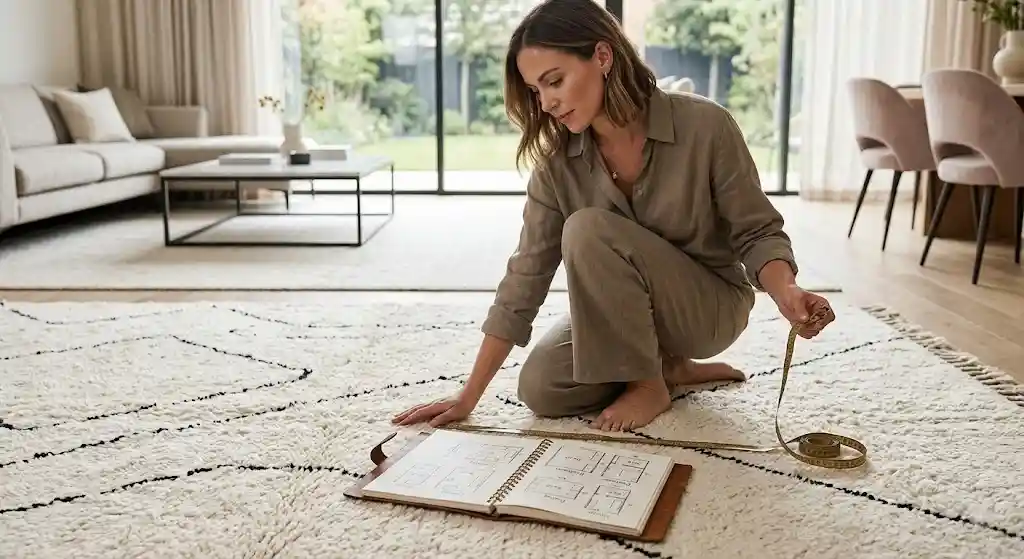
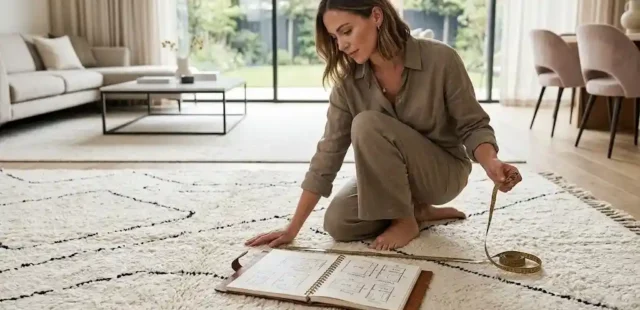
Before looking at any rug, measure the actual room or seating area with a tape measure — don’t estimate. Note the full width and length of the space, then mark out where your furniture currently sits or will sit, keeping standard rug placement guidelines in mind.

As a general rule across every room in the house, leave 12 to 24 inches of bare floor visible around the edges of the rug. This creates a clean, intentional border instead of making the rug look like it’s been shoved wall-to-wall. For open-plan rooms, decide first whether the rug needs to anchor the entire seating area or just define one zone, like a reading corner — that decision affects the size more than anything else.

Living Room Rug Sizes

The living room is usually the rug’s biggest stage, and there are two main layout approaches.

All legs on (the anchored look): Every piece of furniture — sofa, armchairs, coffee table — sits fully on the rug. This is the most cohesive, “grounded” look and tends to suit larger rooms. For this layout:

  • Medium living rooms: 8′ x 10′
  • Larger living rooms or open-plan spaces: 9′ x 12′ or 10′ x 14′

Front legs on (the accent look): Only the front legs of the sofa and chairs rest on the rug, which works well for smaller or more intimate rooms where an 8×10 would feel too large:

  • Small to medium living rooms: 5′ x 8′ or 6′ x 9′
  • Cozy accent under a coffee table only: 4′ x 6′

If you’re unsure which approach fits your room, a simple test: measure from the front of your sofa to the wall behind it. If there’s at least 8 feet of depth, the all-legs-on look usually works. Less than that, lean toward the front-legs-on approach.

Diagram comparing rug placement styles for a living room

Bedroom Rug Sizes

In the bedroom, the bed itself is the anchor, and the goal is for the rug to either extend generously beyond the bed frame or frame it cleanly on the sides.

  • Twin bed: 3′ x 5′ on either side, or a single 4′ x 6′ centered at the foot of the bed
  • Queen bed: 8′ x 10′ for full coverage with the rug extending past the bed on all visible sides, or a 6′ x 9′ positioned so about two-thirds of the bed sits on the rug
  • King bed: 9′ x 12′ for generous coverage, leaving a soft, even border around the bed and nightstands

If a full under-bed rug feels like more than you want, flanking the bed with two smaller pieces creates a cozy, symmetrical look and is a popular choice for those wanting two accent pieces instead of one large one.

Hallway and Entryway Runners

Hallways are one of the easiest spaces to size correctly because the width is fixed by the architecture. Most hallways are around 36 inches wide, so a runner between 24 and 30 inches wide leaves a clean margin on each side. For length, leave roughly 6 to 10 inches of floor visible at each end of the hallway rather than running the rug wall-to-wall.

A flatweave Kilim runner works especially well here — the lower pile height means less of a trip hazard in a high-traffic transition space, and it still brings in the geometric patterns and color that make Moroccan rugs distinctive.

Dining Room Rug Sizes

In the dining room, the rug needs to be large enough that chairs stay on it even when pulled back from the table. As a rule, the rug should extend at least 24 inches beyond each edge of the table.

  • Small dining tables (4 seats): 6′ x 9′
  • Standard rectangular tables (6 seats): 8′ x 10′
  • Larger tables (8+ seats): 9′ x 12′ or larger

Flatwoven Sabra or Kilim rugs are often a better fit than a high-pile Beni Ourain here, since chairs slide more easily over a lower, tighter weave.

Moroccan rug sized correctly under a dining table with chairs pulled out

Why Handwoven Rugs Don’t Come in “Exact” Standard Sizes

This is the part most generic rug guides skip, and it matters specifically for a rug like yours that’s handwoven rather than machine-made. A rug listed as 8′ x 10′ might measure 7’10” x 10’2″ once it’s off the loom. A small variation of a few centimeters in either direction is completely normal, not a manufacturing flaw.

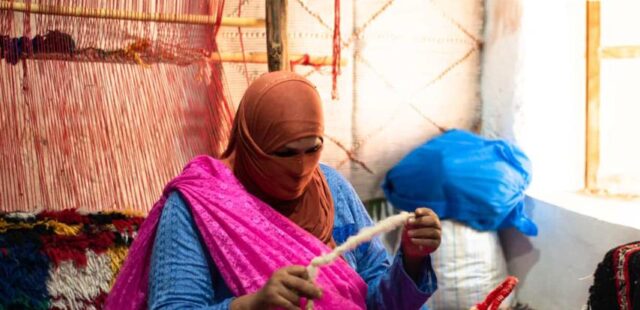
Each Berber House Rugs piece is woven one at a time, by hand, reflecting traditional Berber weaving on upright looms — the same process used for generations in the Atlas Mountains. A machine can produce an exact 96.00 x 120.00 inch rug every single time. A weaver working by hand, from memory, without a printed pattern, produces something close to that size and a little different each time. That slight irregularity is part of the proof that a real person made it, not evidence of a mistake. When you’re comparing dimensions on a product page, plan for a tolerance of roughly 4 to 6 inches and you won’t be caught off guard.

Layering a Smaller Rug Over a Larger Space

If you’ve found the perfect rug but it’s smaller than your room ideally calls for, layering is a completely legitimate styling choice, not a compromise. Place your Moroccan rug — particularly a bold Boucherouite, Azilal, or Glaoui pattern — over a larger, neutral flatweave or jute base rug. This adds texture and depth while letting your handwoven piece stay the visual focal point, and it’s actually how rugs are traditionally layered inside homes in weaving regions like Taznakht: a large neutral base with a smaller, often more colorful piece on top.

FAQ — Frequently Asked Questions

What size rug do I need for an 8×10 living room? For a room that size, an 8′ x 10′ rug with an all-legs-on layout typically works well, leaving a small, even border of floor around the edges.

What size rug goes under a queen bed? An 8′ x 10′ rug gives full coverage with a generous border on all visible sides. A 6′ x 9′ rug also works well if you only want about two-thirds of the bed covered.

Do Moroccan rugs come in exact standard sizes? No — because they’re handwoven rather than machine-made, sizes can vary by a few inches from the listed dimensions. This is normal and is part of what makes each piece genuinely one of a kind.

How wide should a hallway runner be? Most hallways are about 36 inches wide, so a runner between 24 and 30 inches wide leaves a clean, even margin on each side.

Can I use a small rug in a large room? Yes — layering a smaller, bolder Moroccan rug over a larger neutral base rug is a popular styling approach that adds texture without requiring an oversized piece.

How much floor should be visible around a rug? As a general rule, leave 12 to 24 inches of bare floor around the edges of the rug to create a clean, intentional border rather than crowding the walls.

Conclusion

Sizing a Moroccan rug comes down to two things: measuring your space honestly, and deciding how anchored versus accented you want the room to feel. Once you know those two answers, the right size becomes obvious. And if your handwoven rug arrives a few inches different from the listed dimensions, that’s not a flaw to worry about — it’s the signature of a piece made entirely by hand. Once you’ve found the right fit, make sure to read up on how to clean and care for your Moroccan rug so it looks beautiful for decades.

Ready to Find Your Size?

Browse our full collection of handwoven Moroccan rugs by category, or reach out to our team if you’d like sizing help for your specific room.

If you’ve just brought home a handwoven Berber rug — or you’re still deciding whether to invest in one — the same question always comes up: how do you actually keep it clean? Unlike a machine-made synthetic rug from a big-box store, a genuine Berber rug is hand-knotted from natural wool, often by artisans in the Atlas Mountains, using techniques passed down for generations. That craftsmanship is exactly why it deserves a different approach to cleaning.

The good news is that caring for a Berber rug isn’t complicated. It just requires knowing a handful of dos and don’ts that protect the natural wool fibers and the hand-dyed colors. In this guide, we’ll walk through routine maintenance, how to handle spills and stains, what to absolutely avoid, and when it’s worth calling in a professional.

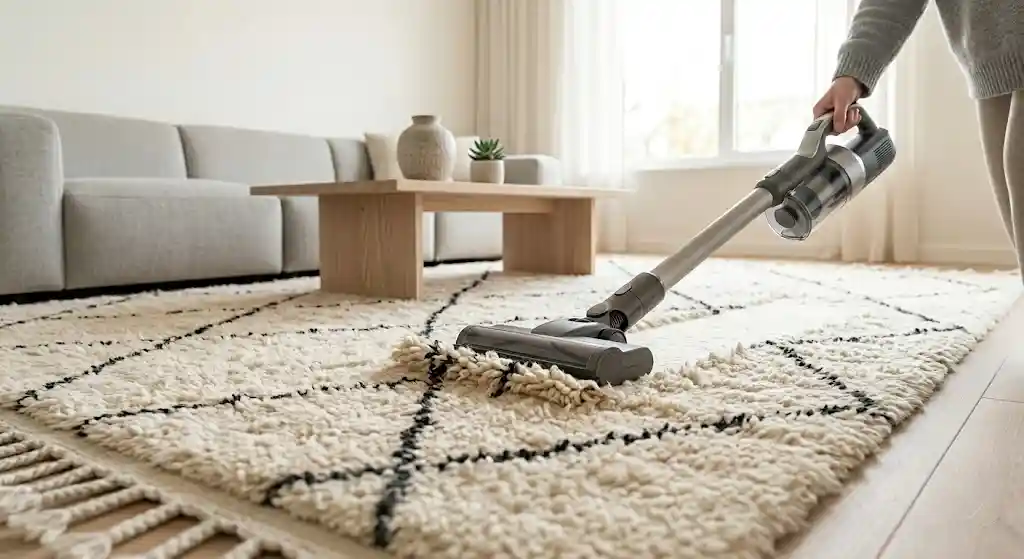
Vacuuming a handwoven Berber rug in a bright living room

Table of Contents

  • Why Berber Rug Wool Needs Different Care
  • Routine Maintenance: Vacuuming and Rotation
  • How to Spot Clean Stains and Spills
  • What You Should Never Do
  • Deep Cleaning at Home vs. Professional Cleaning
  • Protecting Your Rug From Sun, Pets, and Odors
  • FAQ

Why Berber Rug Wool Needs Different Care

Most Berber rugs, including the famous ivory Beni Ourain rugs, are made from 100% natural sheep’s wool that’s hand-washed, carded, spun, and woven by hand using natural materials and traditional weaving tools. That’s part of what makes them feel so soft and age so beautifully. But it also means they react differently to water, heat, and chemicals than a synthetic rug would.

Natural wool fibers absorb moisture, which means too much water or a slow drying process can lead to mildew, a musty smell, or even shrinkage. Plant-based and mineral dyes — the saffron, indigo, and henna pigments traditionally used by Berber weavers — can also be more sensitive to harsh detergents than the synthetic dyes used in mass-produced rugs. Knowing this upfront changes how you approach every cleaning decision below.

Routine Maintenance: Vacuuming and Rotation

Routine care is 90% of what keeps a Berber rug looking its best, and it takes almost no effort once it’s a habit.

  • Vacuum weekly, gently. Use a vacuum on a low-suction setting and avoid the rotating beater bar — it can snag and pull the wool fibers. If your vacuum has a “rug” or “delicate” setting, use it. Vacuum in the direction of the weave, and do both sides every few weeks to remove dust that settles deep in the pile.
  • Rotate every 3 to 6 months. Foot traffic and sunlight wear unevenly, so rotating the rug 180 degrees keeps the fading and wear consistent across the whole piece instead of concentrated in one corner.
  • Shake out smaller rugs. If you have a smaller piece — a Kilim runner or a Sabra accent rug — taking it outside and shaking it out once a month removes loose dirt before it works its way into the base of the fibers.
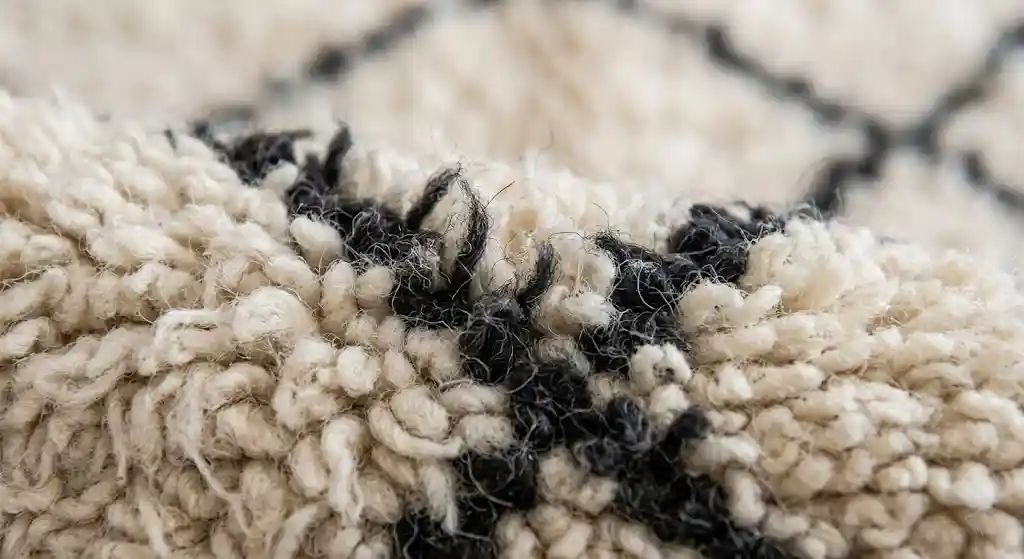
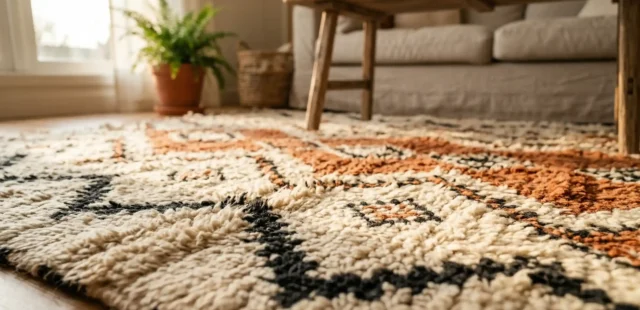
Close-up of hand-knotted wool fibers on a Beni Ourain rug showing natural texture and ivory color with black geometric pattern

How to Spot Clean Stains and Spills

Spills happen, and reacting quickly is the single most important factor in whether a stain comes out.

  1. Blot immediately with a clean, dry cloth or paper towel. Press, don’t rub — rubbing pushes the stain deeper into the wool and spreads it.
  2. Remove any solids first with a spoon or dull knife if it’s food or something with texture.
  3. Mix a mild solution: one part gentle, pH-neutral wool detergent or a mild dish soap to three parts cold water.
  4. Test on a hidden corner first, like the back edge or under a fringe, to make sure the dye doesn’t run.
  5. Dab gently with the solution using a soft cloth, working from the outside of the stain inward.
  6. Rinse with a clean, damp cloth to remove soap residue, then blot dry.
  7. Air dry completely, ideally flat, before walking on the rug again.

For coffee, tea, wine, or pet accidents, the same process applies — just be faster. The longer a stain sits, the more likely it is to set permanently into the wool.

What You Should Never Do

A few mistakes account for most of the damage we see on handwoven rugs, and they’re easy to avoid once you know them.

  • Never machine wash a Berber rug. Washing machines twist and felt natural wool fibers, which can permanently distort the pile and shrink the rug.
  • Avoid hot water. Heat can cause natural dyes to bleed or fade. Always use cold or lukewarm water.
  • Don’t soak the rug. Oversaturating wool slows drying time dramatically, which invites mold, mildew, and a lingering musty smell. A small amount of water goes a long way.
  • Skip harsh chemicals and bleach. Strong detergents and bleach strip the lanolin in natural wool that gives it softness and some natural stain resistance, and can discolor hand-dyed sections.
  • Don’t dry in direct, prolonged sunlight. A little filtered sun helps with odor and bacteria, but hours of direct UV exposure will fade the natural pigments over time — the same reason we recommend rotating the rug regularly even when it’s not being cleaned.
Gentle wool-safe cleaning supplies for Berber rug stain removal

Deep Cleaning at Home vs. Professional Cleaning

For most households, vacuuming and prompt spot cleaning will keep a Berber rug looking great for years. But every rug eventually benefits from a deeper clean.

  • Light deep cleaning at home works for smaller rugs (think Kilim and Sabra rugs): lay the rug flat outdoors on a clean surface, sprinkle baking soda over the whole surface, let it sit for 30–60 minutes to absorb odor and oils, then vacuum thoroughly. Follow with a gentle hand-wash using the mild soap solution described above if needed, then air dry flat in a shaded, well-ventilated spot.
  • Professional cleaning is worth it for larger rugs (most Beni Ourain and Glaoui pieces fall into this category), antique or vintage rugs, rugs with stubborn or set-in stains, or any rug in a high-traffic area like an entryway or living room. Look for a cleaner with specific experience in handwoven wool and natural dyes — not a generic carpet cleaning service used to synthetic carpet. As a general guideline, a professional clean every 2 to 5 years is enough for most homes, more often if the rug sees heavy daily use.

Protecting Your Rug From Sun, Pets, and Odors

A little prevention goes further than any cleaning method.

  • Use a rug pad underneath. It reduces slipping, adds cushioning, and lets air circulate underneath the rug, which helps prevent moisture buildup against the floor.
  • Keep pet nails trimmed if you share your home with cats or dogs — snagged wool loops are one of the most common causes of small rug damage over time.
  • Manage sun exposure with curtains or blinds during peak daylight hours, especially for rugs placed near south-facing windows.
  • For odors, baking soda left on the surface for an hour before vacuuming works well for everyday freshness. For a deeper, more natural deodorizing method, some artisans recommend folding the rug with dried lavender between the layers for a day or two before shaking it out — a traditional trick that works without any chemical sprays.

FAQ — Frequently Asked Questions

Can you vacuum a Berber rug? Yes, vacuum regularly using a low-suction setting without a rotating beater bar, which can pull and damage the wool fibers. Vacuum in the direction of the weave for best results.

Can you machine wash a Moroccan rug? No. Machine washing twists and felts natural wool, which can permanently distort the pile and shrink the rug. Hand cleaning or professional cleaning is always recommended.

How often should a Berber rug be professionally cleaned? Most homes only need professional cleaning every 2 to 5 years, depending on foot traffic. High-traffic areas like hallways or living rooms may need it more often.

Will my Berber rug fade in sunlight? Direct, prolonged sunlight can fade natural plant-based dyes over time. Rotating the rug every few months and using curtains during peak sun hours helps preserve the original color.

How do I get a smell out of my Berber rug? Sprinkle baking soda over the surface, let it sit for 30–60 minutes, then vacuum thoroughly. For stronger odors, airing the rug outdoors in shade for a few hours also helps.

Is Beni Ourain wool harder to clean than other rug types? Not harder, just different. Its thick, plush pile holds more dust than flatweave styles like Kilim, so it benefits from more frequent gentle vacuuming, but the same overall care rules apply.

Conclusion

A genuine Berber rug is built to last for decades, and sometimes generations, when it’s cared for the right way. The core rules are simple: vacuum gently and often, act fast on spills, avoid heat and harsh chemicals, and call in a professional for deep cleans on larger or older pieces. Treat the wool the way the artisans who made it intended, and your rug will only get softer and more beautiful with age. If you’re still doing your research, you can also learn how to tell if a Berber rug is authentic before making your investment.

Ready to Find Your Perfect Rug?

Looking for a handwoven Berber rug to add to your home? Explore our full collection of authentic Moroccan rugs, each one handwoven from natural wool by skilled artisans in the Atlas Mountains, with free DHL shipping worldwide.