
Best Moroccan Rugs for Scandinavian and Minimalist Interiors (2026 Edition)
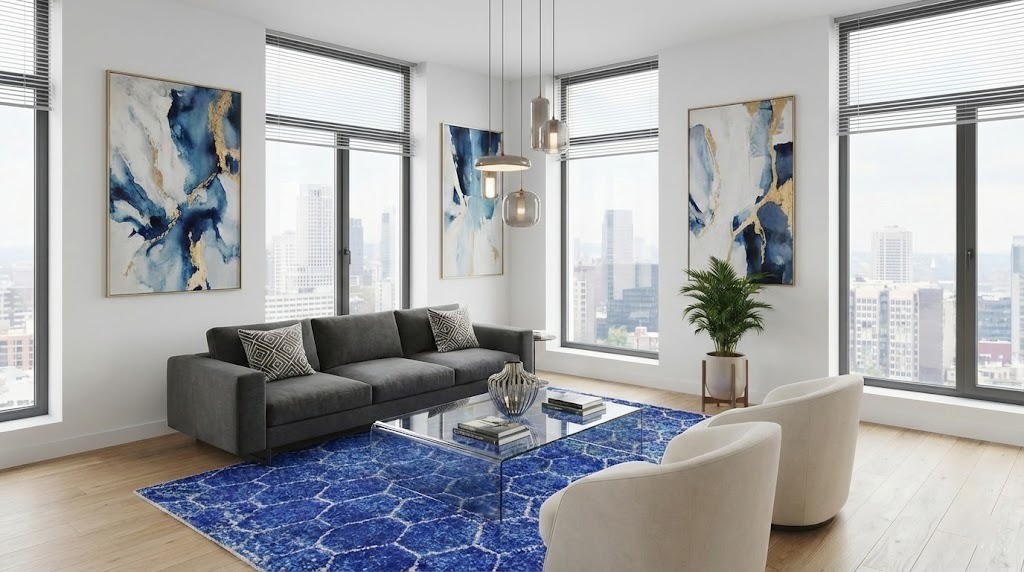
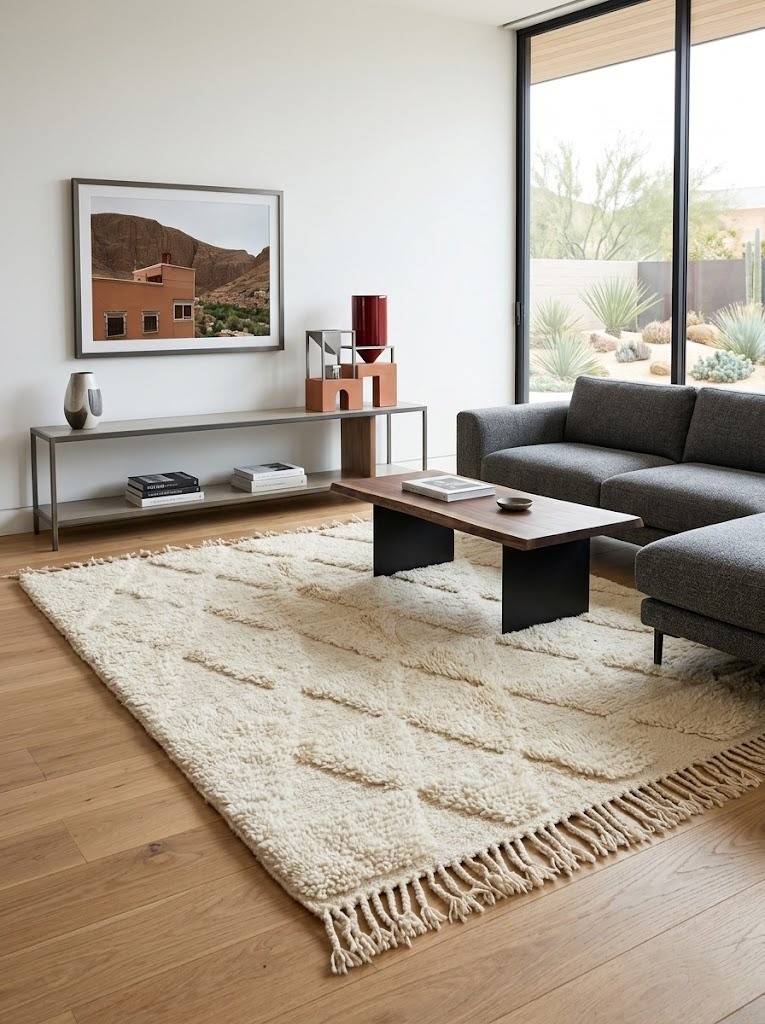
Scandinavian design and Moroccan rugs might seem like an unlikely pairing at first glance — one is defined by strict architectural restraint, the other by deep texture and tribal pattern. Yet, it has become one of the most natural, enduring style combinations in interior design today. Walk through any professionally styled minimalist living room, and there is a very good chance a handwoven Moroccan rug is doing the quiet, essential work of warming up the space.
The reason this pairing works so seamlessly comes down to contrast and balance. In this guide, we will explore exactly why Moroccan rugs — Beni Ourain styles in particular — fit so naturally into Scandinavian and minimalist interiors. We’ll also share expert styling tips, common pitfalls to avoid, and recommend specific pieces from our collection that bring this elevated look to life.

Table of Contents
- Why Moroccan Rugs Work in Minimalist Spaces
- The Case for Beni Ourain
- Styling Tips for a Minimalist Room
- What to Avoid in a Minimalist Space
- Our Top Picks for 2026
- FAQ
Why Moroccan Rugs Work in Minimalist Spaces
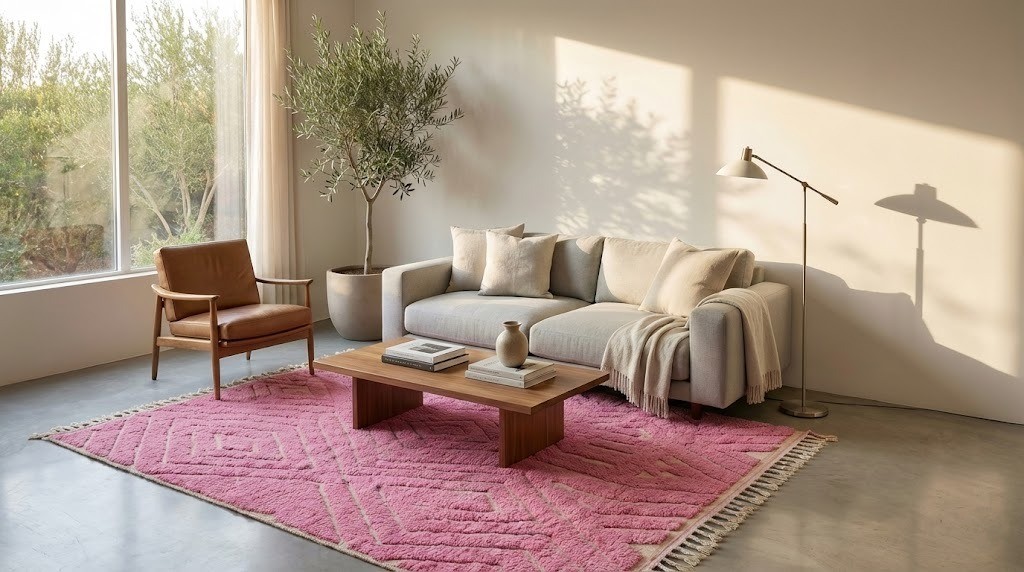
Scandinavian design is built on clean lines, light wood, neutral palettes, and strictly uncluttered rooms. However, when taken too far, that visual restraint can start to feel cold, flat, or overly sterile. This is exactly the design gap a handwoven Moroccan rug fills.
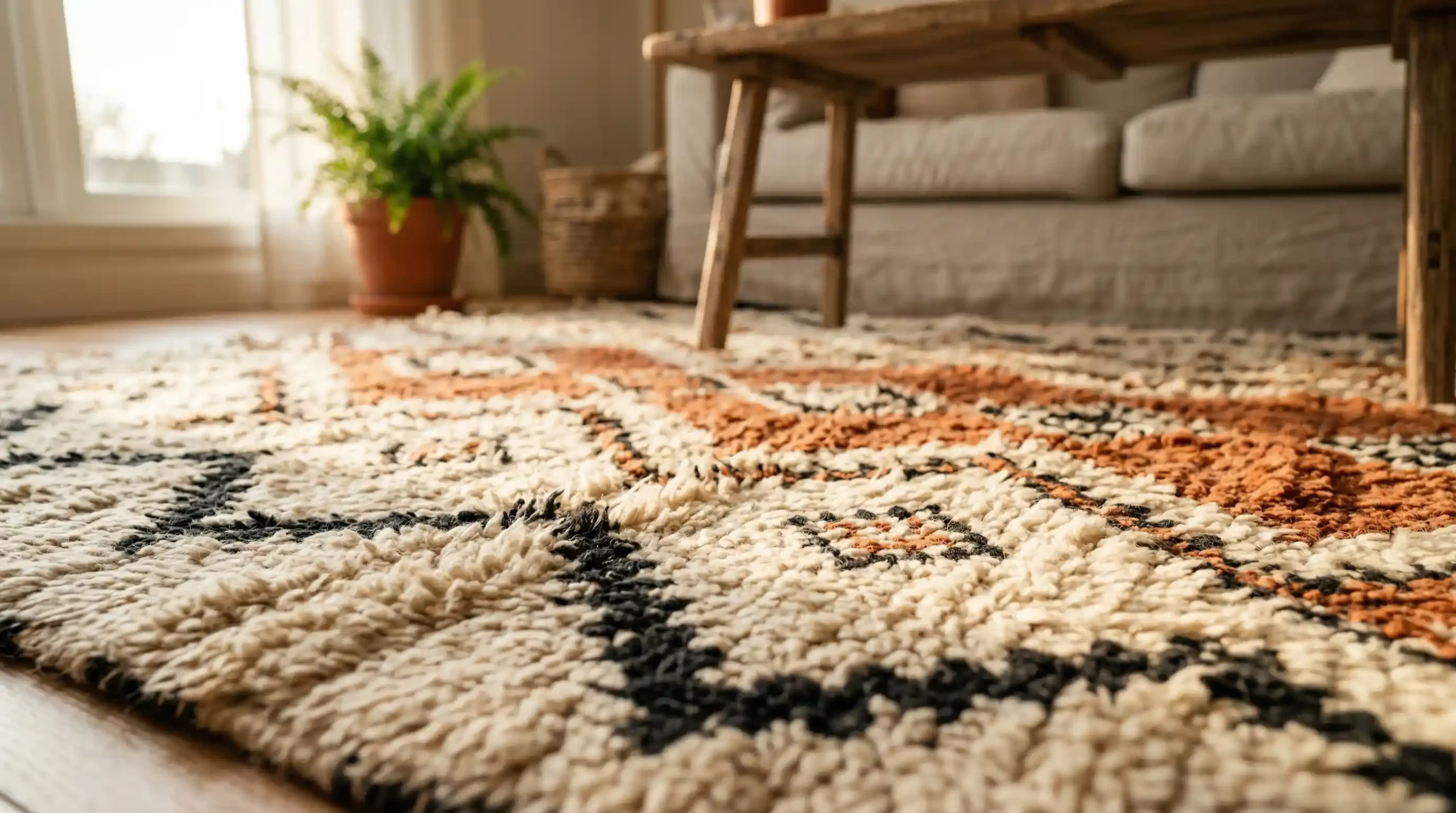
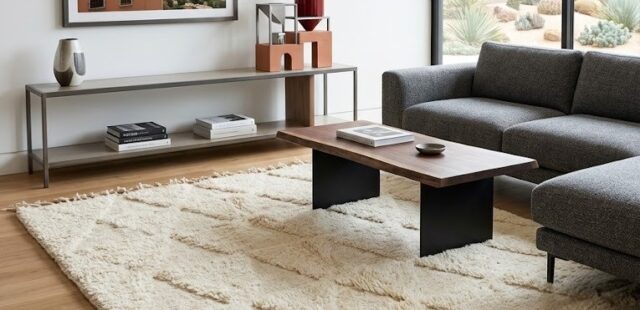
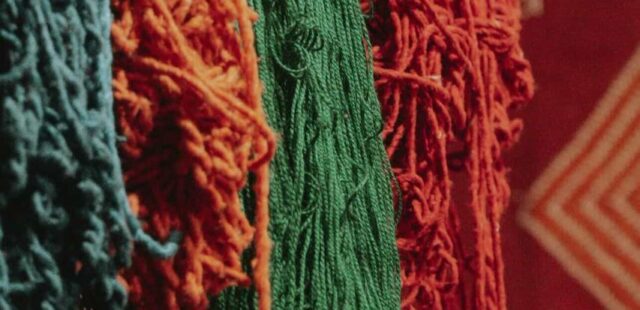
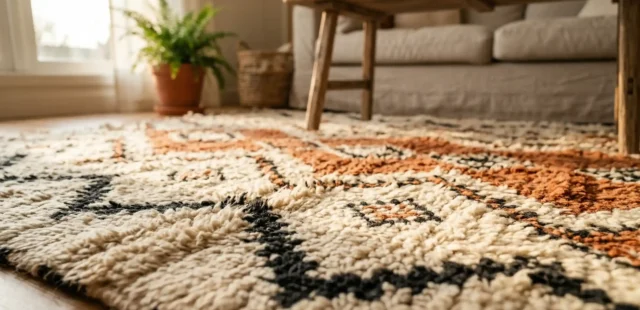
The thick, organic texture of hand-knotted wool brings warmth and tactile interest into a room without adding chaotic visual noise. Because the colors remain neutral and the geometric patterns are remarkably simple, the rug acts as a grounding element rather than a distraction.
This concept is deeply rooted in the idea of hygge, the Danish concept of coziness and comfort within simplicity. A soft, plush wool rug underfoot—especially one carrying the slight irregularities and soulful warmth of a handmade piece—is one of the most effective, direct ways to introduce inviting warmth into a rigid minimalist room.
The Case for Beni Ourain
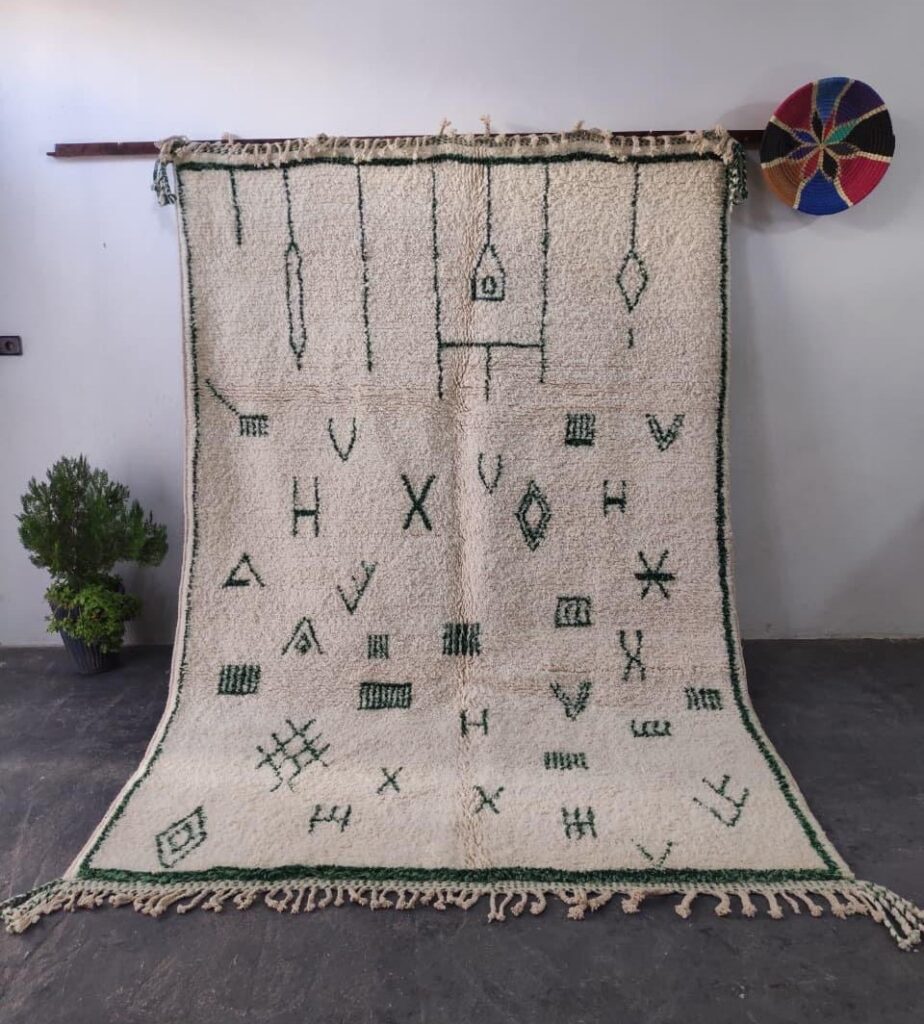
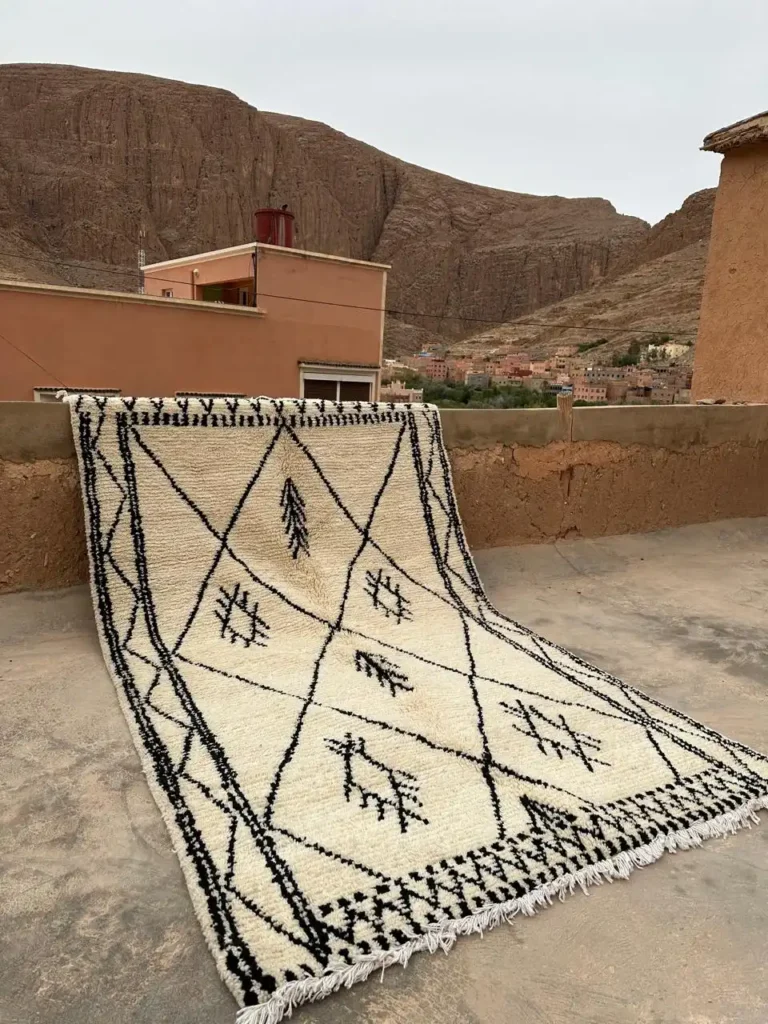
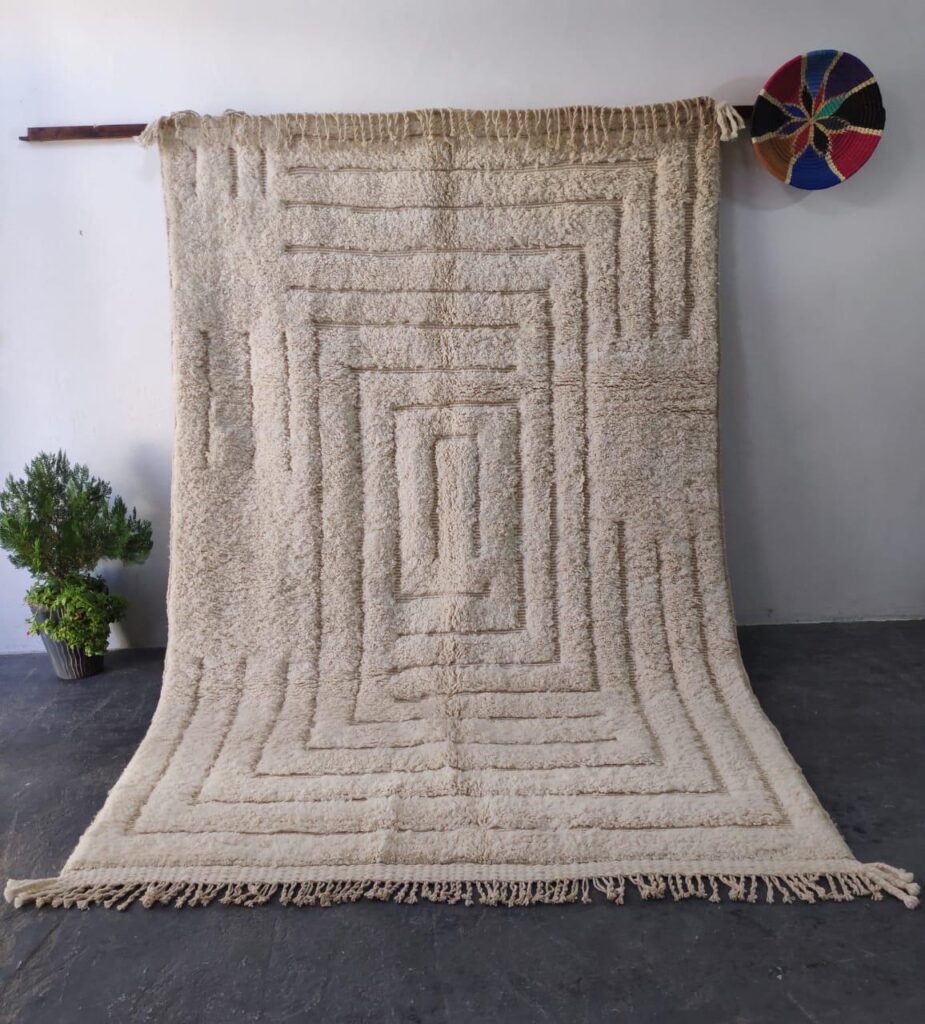
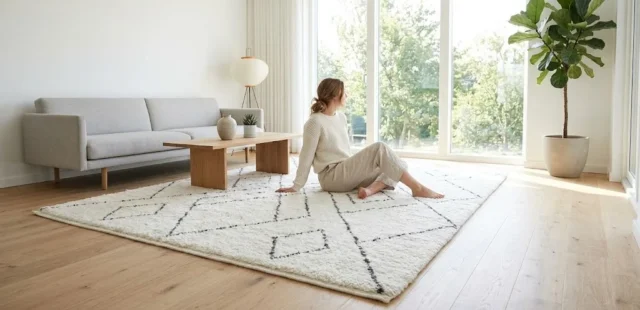
If there is one specific Moroccan rug style engineered for this exact aesthetic, it is the Beni Ourain. Characterized by natural, undyed ivory wool and restrained black or brown geometric lines, it never competes with a room’s carefully curated color palette. Instead, it becomes a seamless part of the neutral foundation, much in the same way a slab of natural stone or a piece of raw timber would.
This foundational quality is precisely why visionary modernist architects incorporated Le Corbusier’s use of Beni Ourain rugs into some of their most iconic interiors decades before “Scandinavian style” became a mainstream global trend. The same minimalist logic—the inherent human need for organic texture set against clean, rigid geometry—applies just as strongly in 2026.


Styling Tips for a Minimalist Room
To execute this pairing flawlessly, follow these practical interior design guidelines:
- Let the rug be the texture, not the color. Keep walls, furniture, and large surfaces distinctly neutral—think crisp white, warm cream, soft gray, and light ash wood. Allow the rug’s thick wool texture and subtle tribal pattern to provide the primary visual interest in the room.
- Pair with natural materials. Washed linen, raw wood, woven rattan, and matte stoneware all sit beautifully alongside a Beni Ourain rug because they share the same handmade, organic, and unpolished quality.
- Leave breathing room. Minimalist spaces rely heavily on negative space. Don’t crowd the rug with too much furniture or floor-level decor. Let it anchor the room with visible hardwood framing it, rather than disappearing entirely under clutter.
- Keep accent colors muted. If you wish to introduce a pop of color, choose one or two muted, earthy tones—such as sage green, washed terracotta, or soft ochre—in a throw blanket or cushion, rather than introducing jarring, highly saturated primary colors.
What to Avoid in a Minimalist Space
Even the most beautiful rug can pull a minimalist room out of balance if styled incorrectly. Avoid these common mistakes:
- Avoid layering multiple bold patterns. A Beni Ourain’s simple geometric lines work specifically because they are usually the only pattern in the room. Adding a busy patterned sofa, wallpaper, or heavily detailed curtains alongside it creates visual competition.
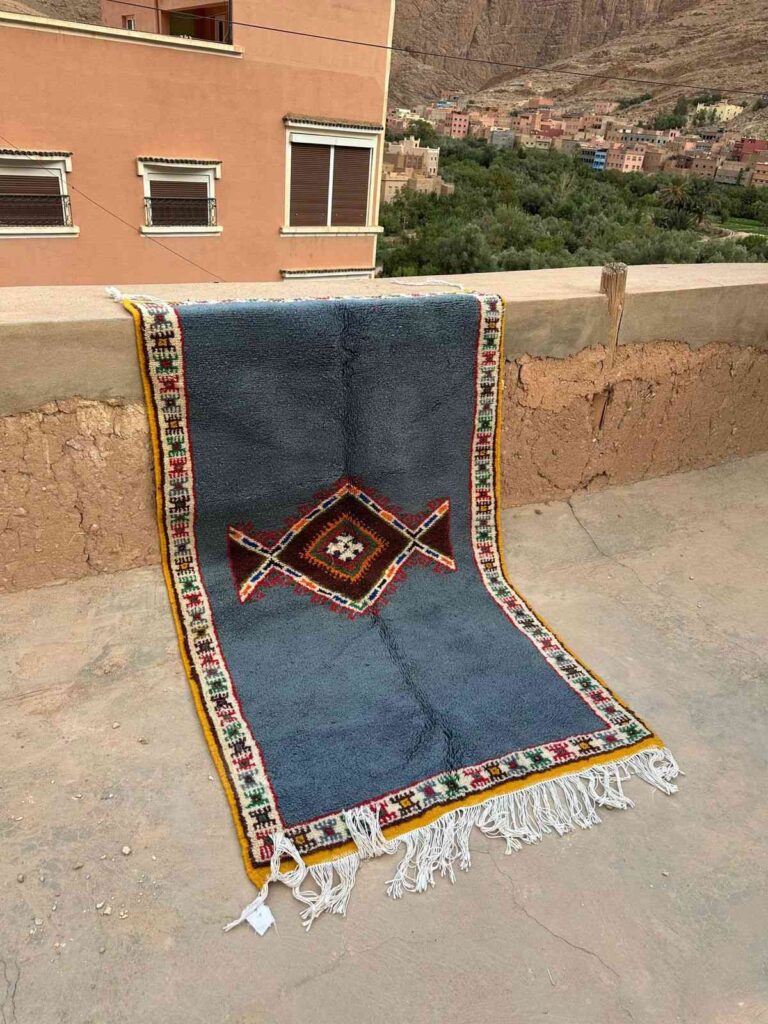
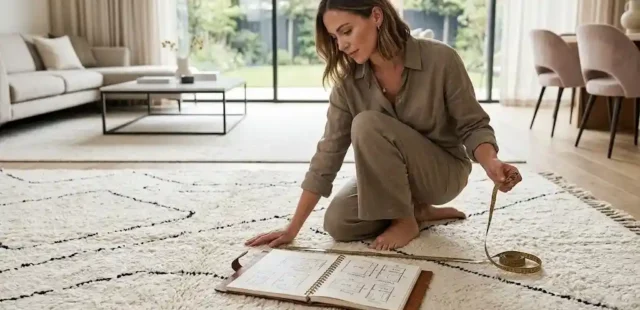
- Don’t oversize the rug pattern relative to the room. In smaller, compact spaces, choose a piece with finer, more delicate geometric lines. A massive, oversized diamond motif can easily overwhelm a small room and make it feel cramped.
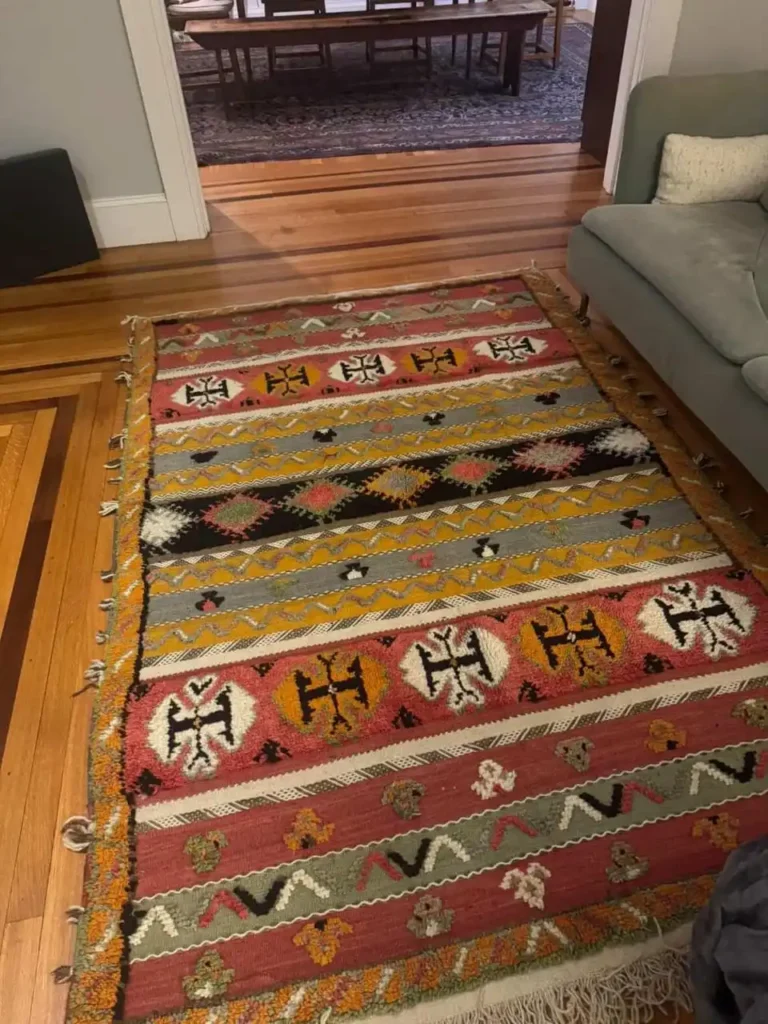
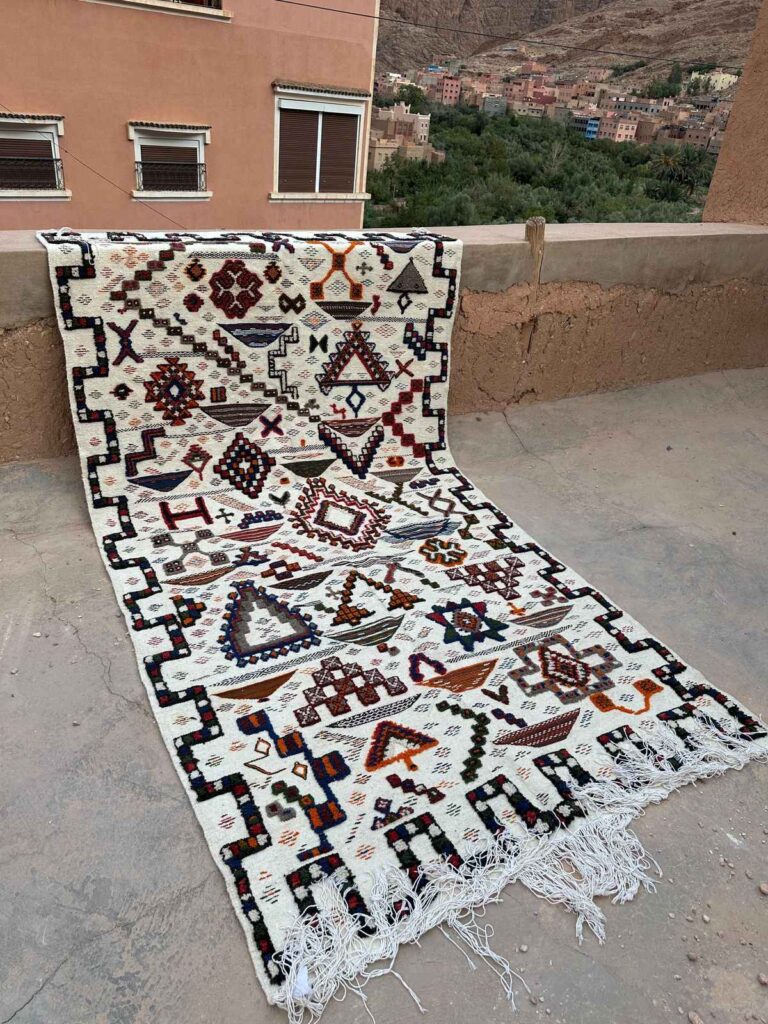
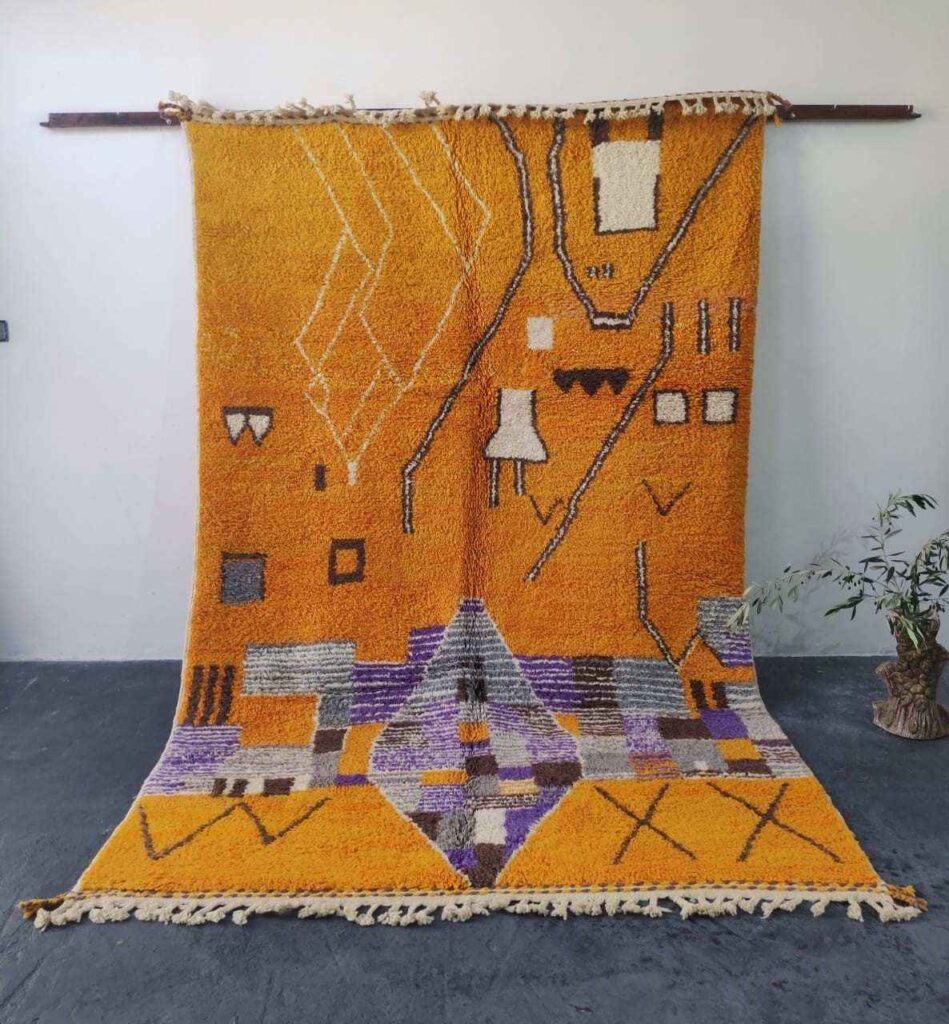
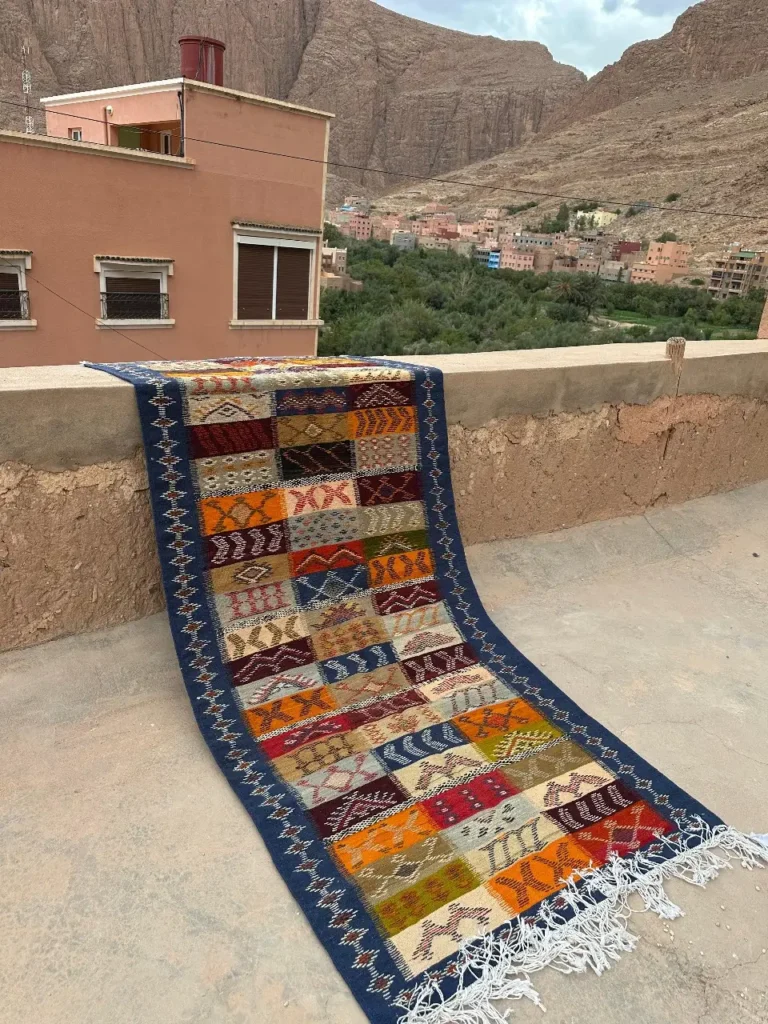
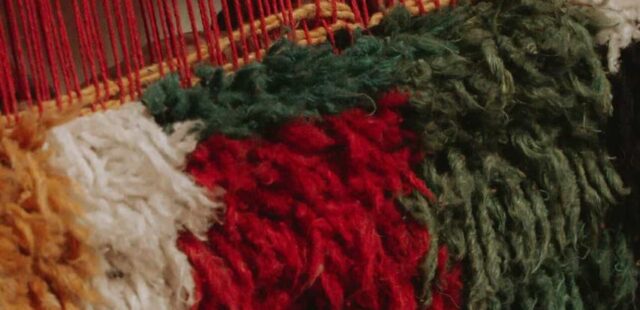
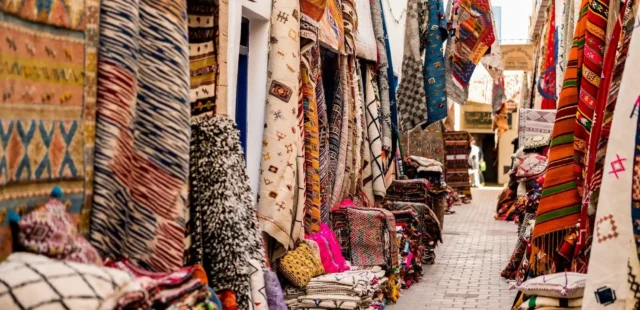
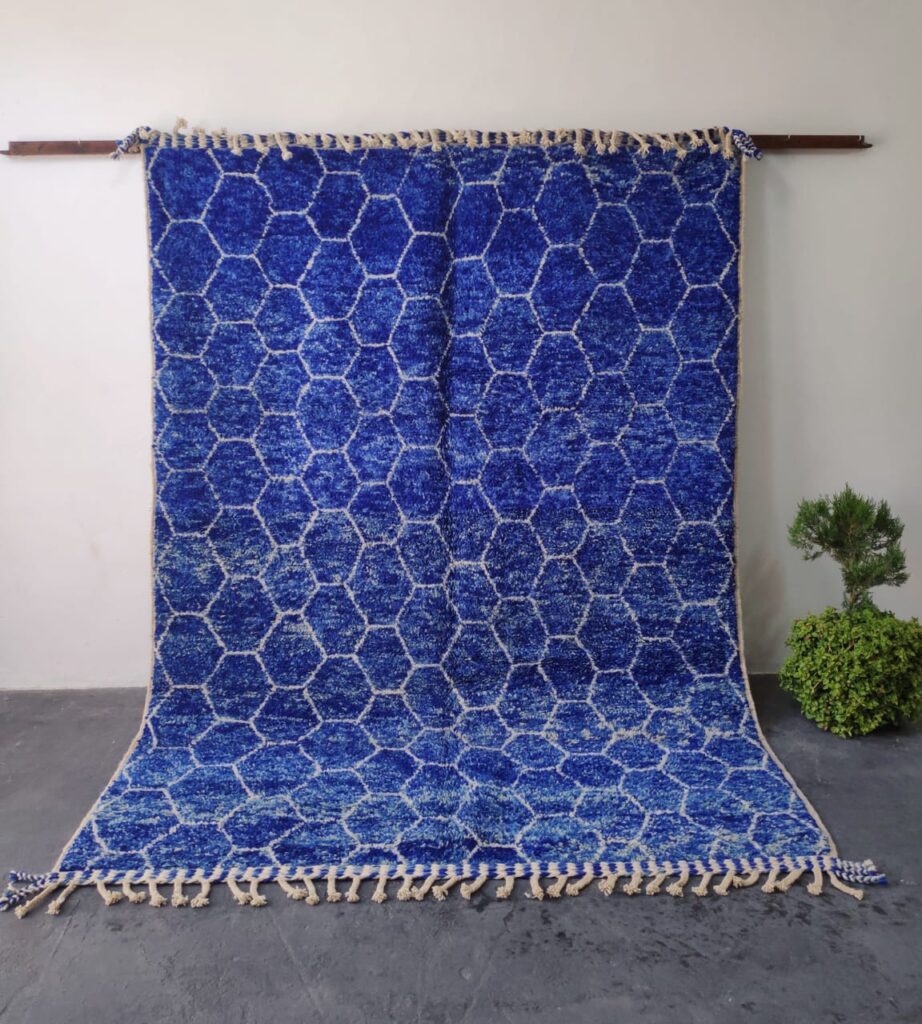
- Skip overly saturated colors for the base rug. Save vibrant, highly saturated pieces for accent placements. If you are debating between styles like Beni Ourain vs Kilim vs Boucherouite, remember that colorful Boucherouite rugs function better as small layered accents or wall hangings in a minimalist setting, rather than as the room’s primary floor covering.

Our Top Picks for 2026
If you are looking to curate this aesthetic in your own home, here are a few standout pieces from our collection that capture the minimalist look perfectly:
- Authentic Handwoven Beni Ouarain Berber Rug — The quintessential, foolproof choice: thick ivory wool with classic black geometric lines. This is the ultimate foundation piece for any Scandinavian-inspired living room.
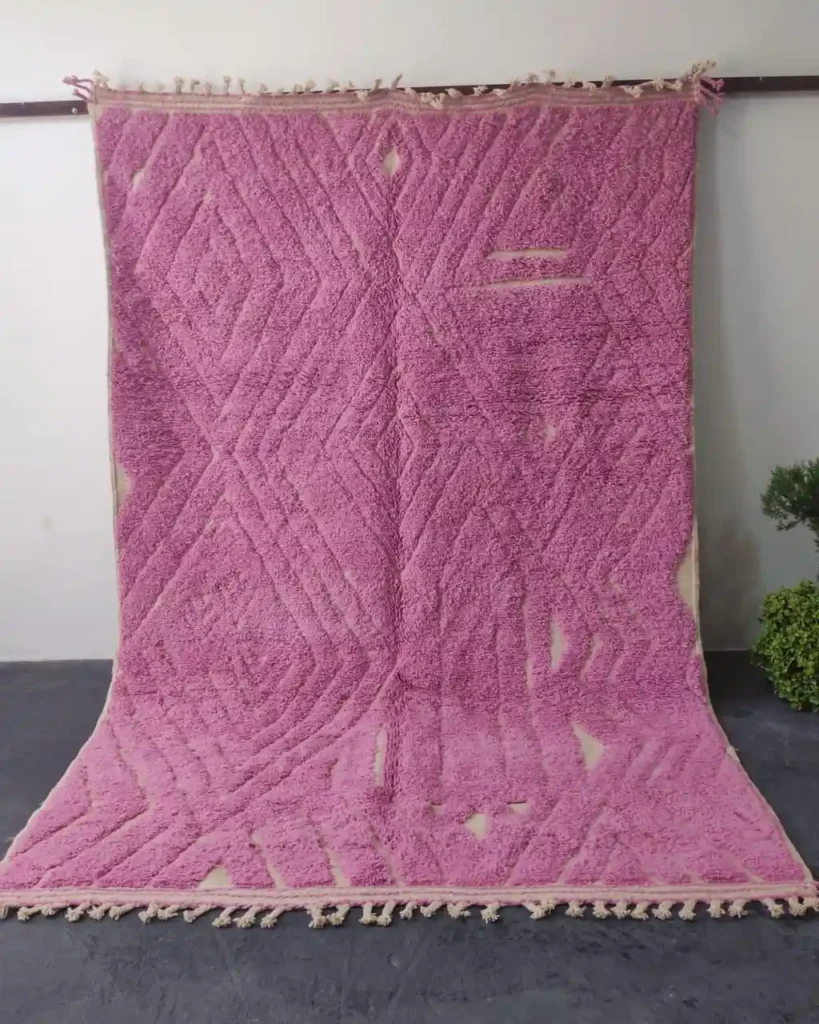
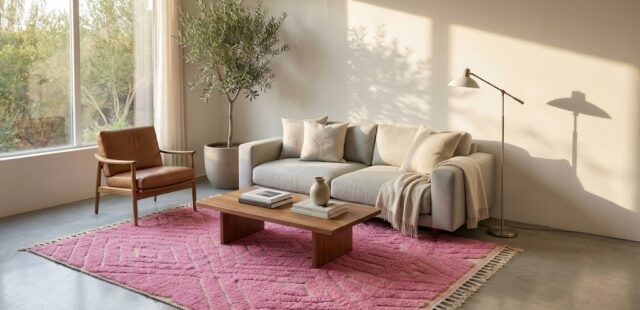
- Rosy Beni Ouarian Berber Rug — A softer, subtly warmer variation ideal for minimalist bedrooms or reading nooks, where a slightly warmer undertone works beautifully against white linen and light oak wood.
- Taznakht Wool Berber Rug — For those who want a touch more intricate pattern detail while still strictly adhering to a neutral, minimalist-friendly color palette.
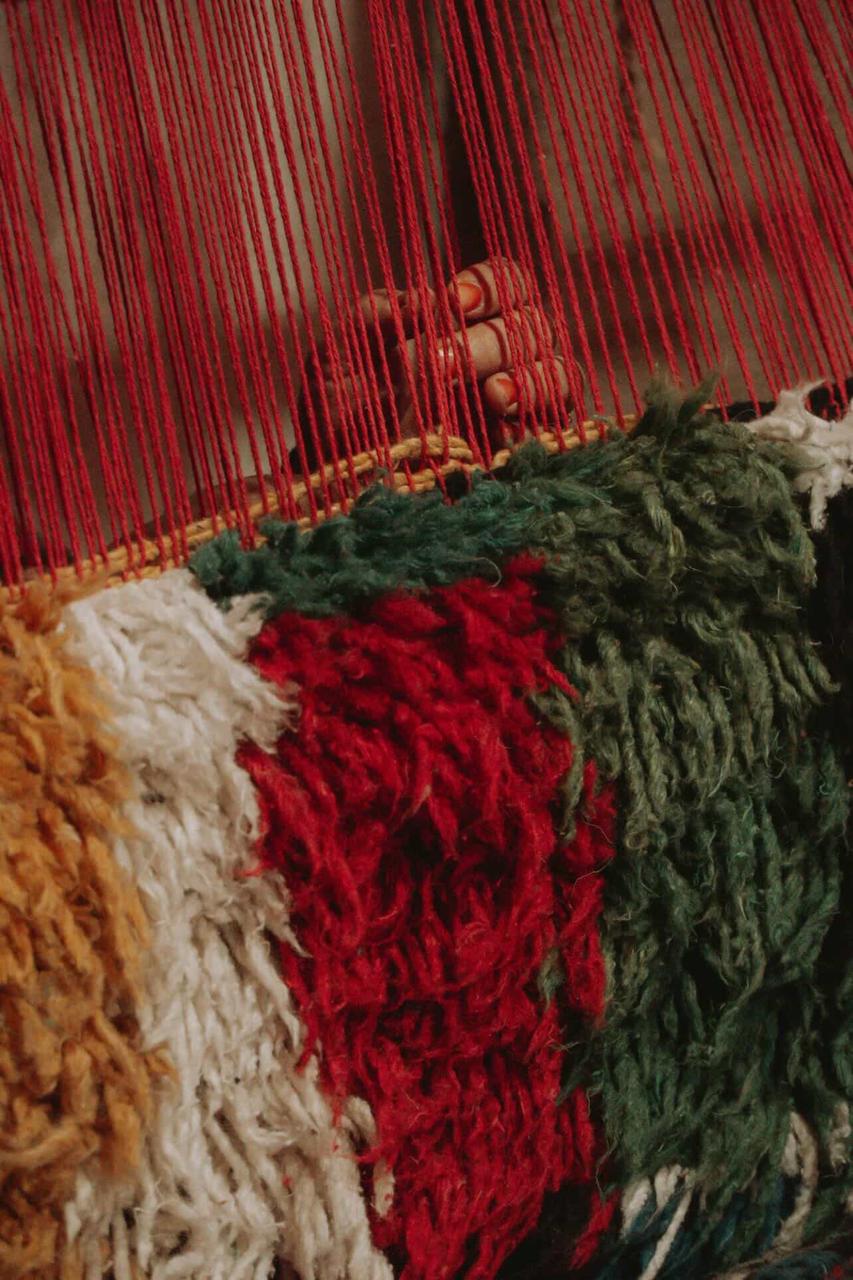
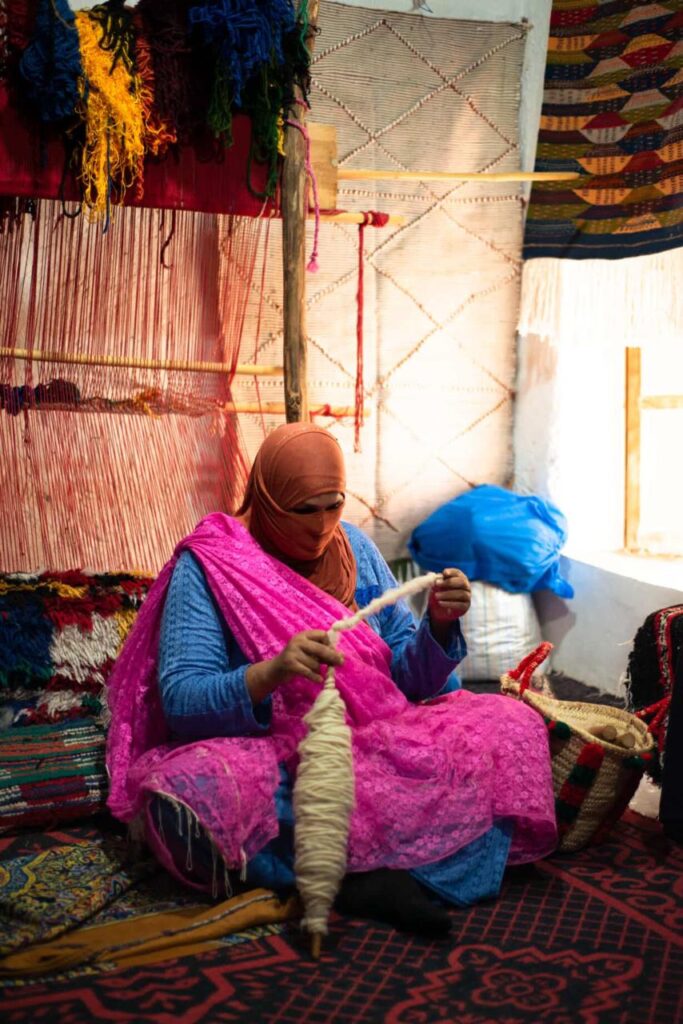
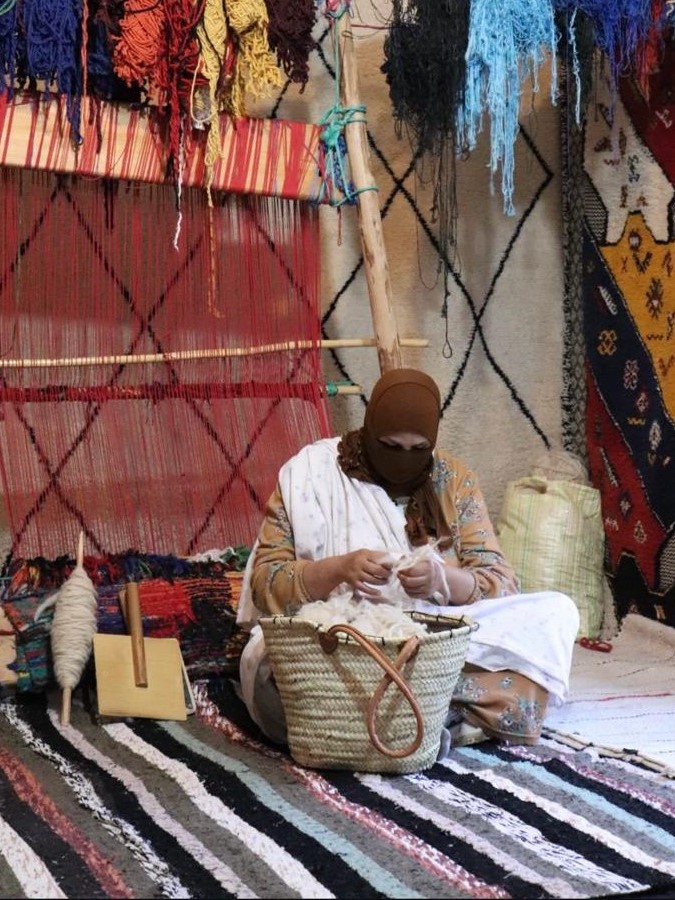
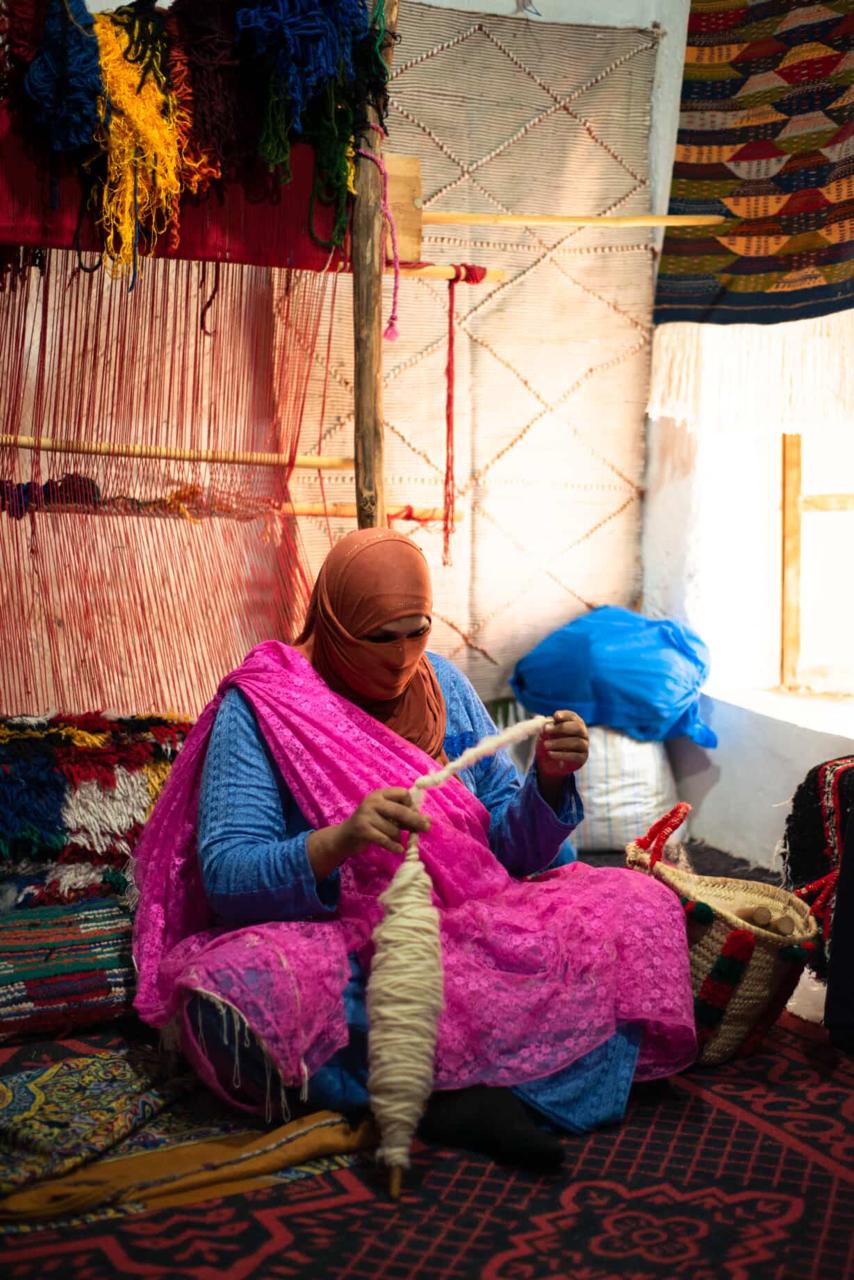
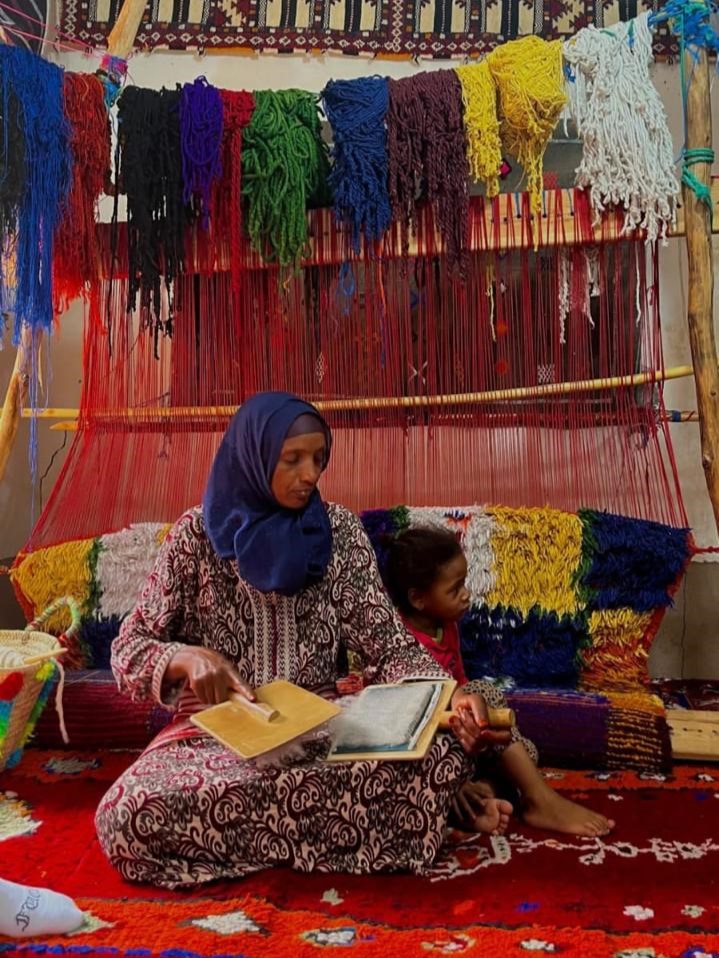
Each piece is hand-knotted by skilled artisans using natural, undyed wool. This means no two rugs are exactly alike — a quiet, bespoke detail that perfectly complements the intentional spirit of Scandinavian design.
FAQ — Frequently Asked Questions
Why do Moroccan rugs work well in Scandinavian interiors? Their thick, natural wool texture adds vital warmth and tactile interest to minimalist rooms without disrupting the neutral color palette or clean architectural lines that define Scandinavian style.
Which Moroccan rug style is best for a minimalist home? Beni Ourain rugs, characterized by their undyed ivory wool and simple black or brown geometric lines, are widely considered the classic choice for minimalist and Scandinavian interiors.
Can I add a colorful Moroccan rug to a minimalist room? Yes, but it works best as a small, layered accent rather than the room’s primary rug. This keeps the overall palette restrained and avoids visual competition with your minimalist decor.
What furniture pairs well with a Beni Ourain rug? Light wood (like ash, oak, or birch), linen upholstery, woven rattan, and matte stoneware all complement the organic, handmade texture of a Beni Ourain rug exceptionally well.
Is a Beni Ourain rug too plain for a statement room? Not at all — its simplicity is exactly what makes it so versatile. The rich texture and slight irregularity of the handwoven wool provide more than enough visual interest on their own, negating the need for bold, overwhelming colors.
Conclusion
The enduring pairing of Scandinavian minimalism and Moroccan craftsmanship works because the two styles perfectly balance one another: clean lines desperately need warmth, and organic warmth benefits from architectural structure. A handwoven Beni Ourain rug brings exactly that equilibrium into a room, adding profound texture and history without ever disrupting the calm, uncluttered atmosphere that defines minimalist design. Once you’ve selected your perfect piece, be sure to read our guide on how to clean and care for your Beni Ourain rug to ensure it lasts a lifetime.
Ready to Transform Your Space?
Bring that timeless warmth into your own home. Explore our curated Beni Ourain collection of authentic, handwoven rugs, complete with free DHL shipping worldwide.