
If you’ve just brought home a handwoven Berber rug — or you’re still deciding whether to invest in one — the same question always comes up: how do you actually keep it clean? Unlike a machine-made synthetic rug from a big-box store, a genuine Berber rug is hand-knotted from natural wool, often by artisans in the Atlas Mountains, using techniques passed down for generations. That craftsmanship is exactly why it deserves a different approach to cleaning.
The good news is that caring for a Berber rug isn’t complicated. It just requires knowing a handful of dos and don’ts that protect the natural wool fibers and the hand-dyed colors. In this guide, we’ll walk through routine maintenance, how to handle spills and stains, what to absolutely avoid, and when it’s worth calling in a professional.
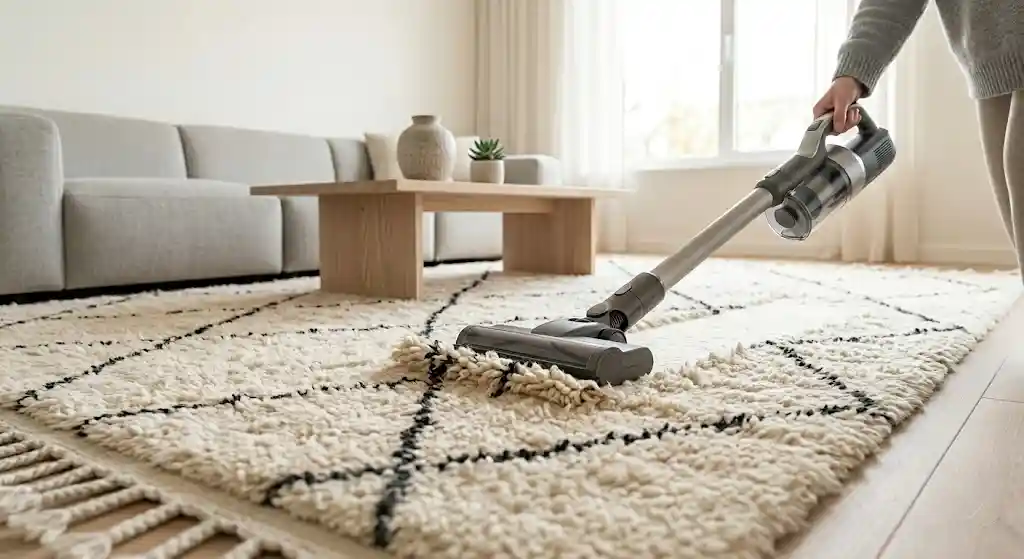
Table of Contents
- Why Berber Rug Wool Needs Different Care
- Routine Maintenance: Vacuuming and Rotation
- How to Spot Clean Stains and Spills
- What You Should Never Do
- Deep Cleaning at Home vs. Professional Cleaning
- Protecting Your Rug From Sun, Pets, and Odors
- FAQ
Why Berber Rug Wool Needs Different Care
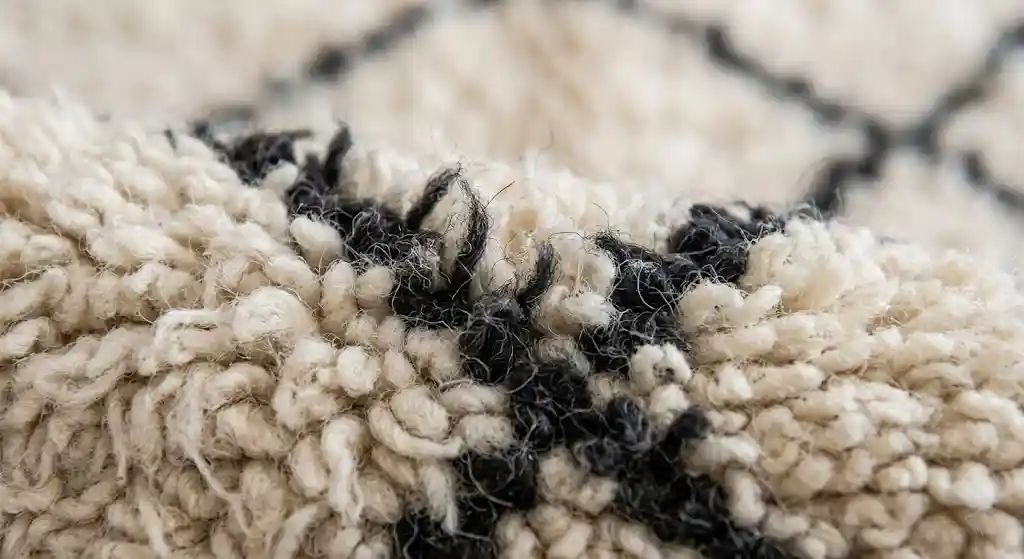
Most Berber rugs, including the famous ivory Beni Ourain rugs, are made from 100% natural sheep’s wool that’s hand-washed, carded, spun, and woven by hand using natural materials and traditional weaving tools. That’s part of what makes them feel so soft and age so beautifully. But it also means they react differently to water, heat, and chemicals than a synthetic rug would.
Natural wool fibers absorb moisture, which means too much water or a slow drying process can lead to mildew, a musty smell, or even shrinkage. Plant-based and mineral dyes — the saffron, indigo, and henna pigments traditionally used by Berber weavers — can also be more sensitive to harsh detergents than the synthetic dyes used in mass-produced rugs. Knowing this upfront changes how you approach every cleaning decision below.
Routine Maintenance: Vacuuming and Rotation
Routine care is 90% of what keeps a Berber rug looking its best, and it takes almost no effort once it’s a habit.
- Vacuum weekly, gently. Use a vacuum on a low-suction setting and avoid the rotating beater bar — it can snag and pull the wool fibers. If your vacuum has a “rug” or “delicate” setting, use it. Vacuum in the direction of the weave, and do both sides every few weeks to remove dust that settles deep in the pile.
- Rotate every 3 to 6 months. Foot traffic and sunlight wear unevenly, so rotating the rug 180 degrees keeps the fading and wear consistent across the whole piece instead of concentrated in one corner.
- Shake out smaller rugs. If you have a smaller piece — a Kilim runner or a Sabra accent rug — taking it outside and shaking it out once a month removes loose dirt before it works its way into the base of the fibers.
How to Spot Clean Stains and Spills
Spills happen, and reacting quickly is the single most important factor in whether a stain comes out.
- Blot immediately with a clean, dry cloth or paper towel. Press, don’t rub — rubbing pushes the stain deeper into the wool and spreads it.
- Remove any solids first with a spoon or dull knife if it’s food or something with texture.
- Mix a mild solution: one part gentle, pH-neutral wool detergent or a mild dish soap to three parts cold water.
- Test on a hidden corner first, like the back edge or under a fringe, to make sure the dye doesn’t run.
- Dab gently with the solution using a soft cloth, working from the outside of the stain inward.
- Rinse with a clean, damp cloth to remove soap residue, then blot dry.
- Air dry completely, ideally flat, before walking on the rug again.
For coffee, tea, wine, or pet accidents, the same process applies — just be faster. The longer a stain sits, the more likely it is to set permanently into the wool.
What You Should Never Do
A few mistakes account for most of the damage we see on handwoven rugs, and they’re easy to avoid once you know them.
- Never machine wash a Berber rug. Washing machines twist and felt natural wool fibers, which can permanently distort the pile and shrink the rug.
- Avoid hot water. Heat can cause natural dyes to bleed or fade. Always use cold or lukewarm water.
- Don’t soak the rug. Oversaturating wool slows drying time dramatically, which invites mold, mildew, and a lingering musty smell. A small amount of water goes a long way.
- Skip harsh chemicals and bleach. Strong detergents and bleach strip the lanolin in natural wool that gives it softness and some natural stain resistance, and can discolor hand-dyed sections.
- Don’t dry in direct, prolonged sunlight. A little filtered sun helps with odor and bacteria, but hours of direct UV exposure will fade the natural pigments over time — the same reason we recommend rotating the rug regularly even when it’s not being cleaned.
Deep Cleaning at Home vs. Professional Cleaning
For most households, vacuuming and prompt spot cleaning will keep a Berber rug looking great for years. But every rug eventually benefits from a deeper clean.
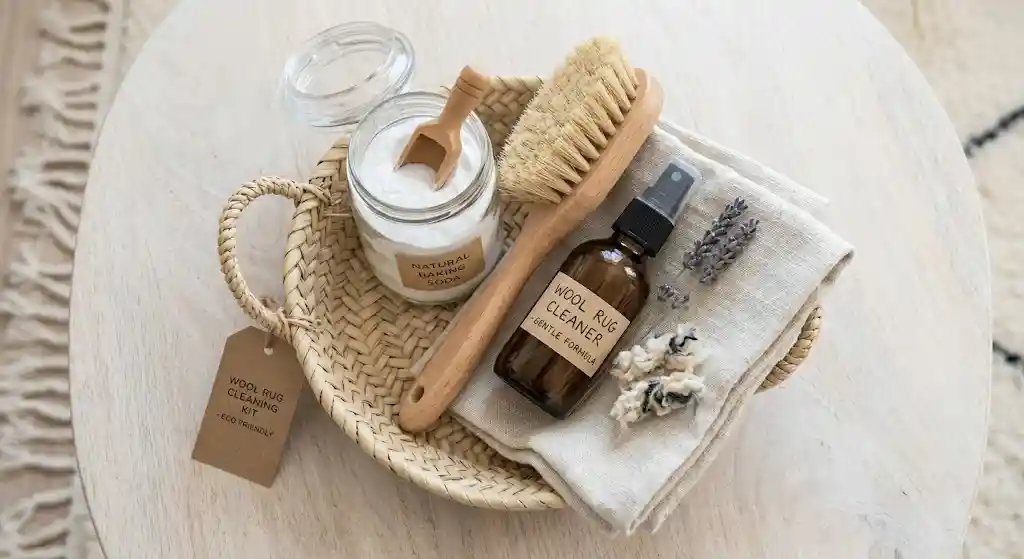
- Light deep cleaning at home works for smaller rugs (think Kilim and Sabra rugs): lay the rug flat outdoors on a clean surface, sprinkle baking soda over the whole surface, let it sit for 30–60 minutes to absorb odor and oils, then vacuum thoroughly. Follow with a gentle hand-wash using the mild soap solution described above if needed, then air dry flat in a shaded, well-ventilated spot.
- Professional cleaning is worth it for larger rugs (most Beni Ourain and Glaoui pieces fall into this category), antique or vintage rugs, rugs with stubborn or set-in stains, or any rug in a high-traffic area like an entryway or living room. Look for a cleaner with specific experience in handwoven wool and natural dyes — not a generic carpet cleaning service used to synthetic carpet. As a general guideline, a professional clean every 2 to 5 years is enough for most homes, more often if the rug sees heavy daily use.
Protecting Your Rug From Sun, Pets, and Odors
A little prevention goes further than any cleaning method.
- Use a rug pad underneath. It reduces slipping, adds cushioning, and lets air circulate underneath the rug, which helps prevent moisture buildup against the floor.
- Keep pet nails trimmed if you share your home with cats or dogs — snagged wool loops are one of the most common causes of small rug damage over time.
- Manage sun exposure with curtains or blinds during peak daylight hours, especially for rugs placed near south-facing windows.
- For odors, baking soda left on the surface for an hour before vacuuming works well for everyday freshness. For a deeper, more natural deodorizing method, some artisans recommend folding the rug with dried lavender between the layers for a day or two before shaking it out — a traditional trick that works without any chemical sprays.
FAQ — Frequently Asked Questions
Can you vacuum a Berber rug? Yes, vacuum regularly using a low-suction setting without a rotating beater bar, which can pull and damage the wool fibers. Vacuum in the direction of the weave for best results.
Can you machine wash a Moroccan rug? No. Machine washing twists and felts natural wool, which can permanently distort the pile and shrink the rug. Hand cleaning or professional cleaning is always recommended.
How often should a Berber rug be professionally cleaned? Most homes only need professional cleaning every 2 to 5 years, depending on foot traffic. High-traffic areas like hallways or living rooms may need it more often.
Will my Berber rug fade in sunlight? Direct, prolonged sunlight can fade natural plant-based dyes over time. Rotating the rug every few months and using curtains during peak sun hours helps preserve the original color.
How do I get a smell out of my Berber rug? Sprinkle baking soda over the surface, let it sit for 30–60 minutes, then vacuum thoroughly. For stronger odors, airing the rug outdoors in shade for a few hours also helps.
Is Beni Ourain wool harder to clean than other rug types? Not harder, just different. Its thick, plush pile holds more dust than flatweave styles like Kilim, so it benefits from more frequent gentle vacuuming, but the same overall care rules apply.
Conclusion
A genuine Berber rug is built to last for decades, and sometimes generations, when it’s cared for the right way. The core rules are simple: vacuum gently and often, act fast on spills, avoid heat and harsh chemicals, and call in a professional for deep cleans on larger or older pieces. Treat the wool the way the artisans who made it intended, and your rug will only get softer and more beautiful with age. If you’re still doing your research, you can also learn how to tell if a Berber rug is authentic before making your investment.
Ready to Find Your Perfect Rug?
Looking for a handwoven Berber rug to add to your home? Explore our full collection of authentic Moroccan rugs, each one handwoven from natural wool by skilled artisans in the Atlas Mountains, with free DHL shipping worldwide.