
What Size Moroccan Rug Do I Need? A Room-by-Room Guide
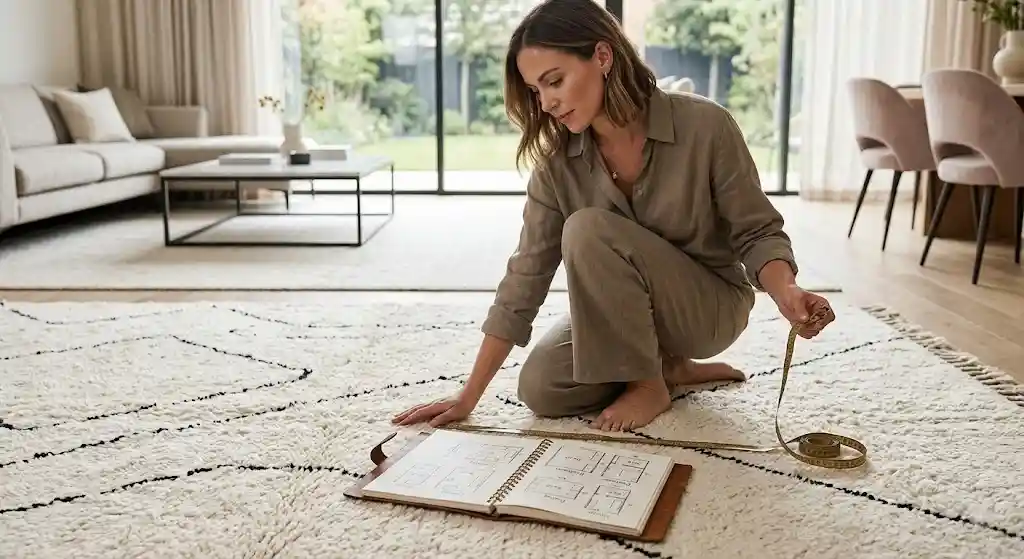
Picking the right size is, by far, the question we hear most from people shopping for their first handwoven Moroccan rug. It makes sense — these are investment pieces, often the focal point of a room, and getting the size wrong can make even the most beautiful rug feel off. A rug that’s too small floats awkwardly in the middle of the floor; one that’s too large overwhelms the furniture around it.
The good news is that sizing a rug isn’t guesswork once you know the basic rules. In this guide, we’ll walk through how to measure your space, the right sizes for living rooms, bedrooms, hallways, and dining rooms, and one thing that’s specific to handwoven rugs that most generic sizing guides don’t mention: a small amount of size variation is completely normal, and it’s part of what makes the piece genuinely handmade.

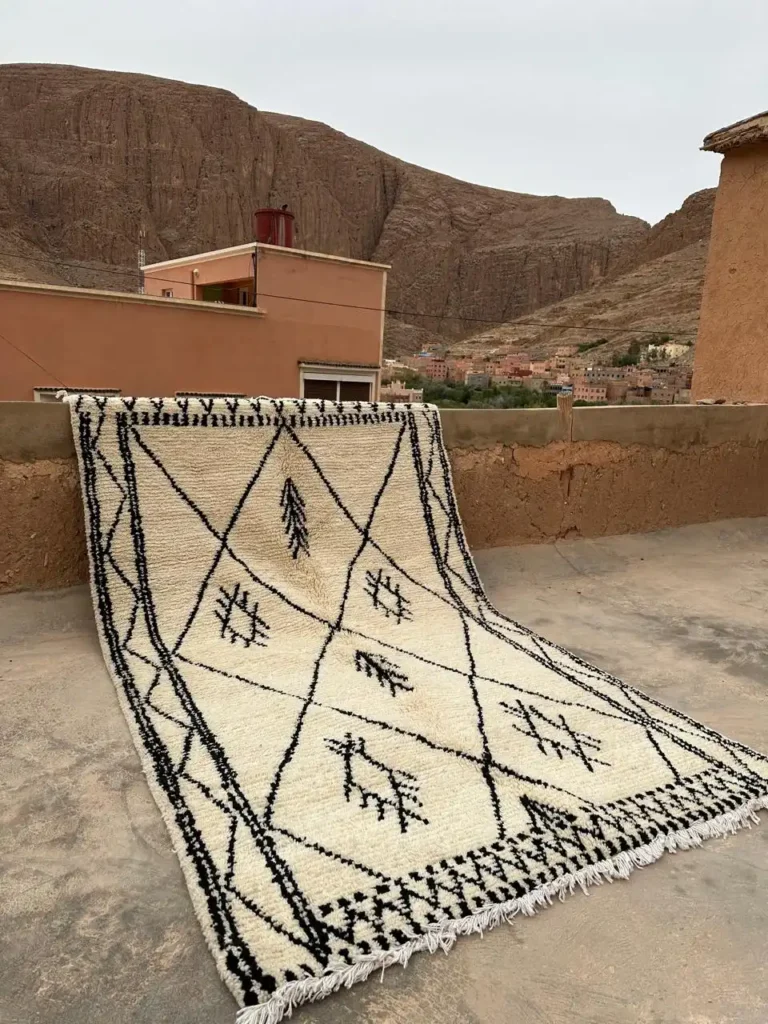
Table of Contents
- How to Measure Your Space First
- Living Room Rug Sizes
- Bedroom Rug Sizes
- Hallway and Entryway Runners
- Dining Room Rug Sizes
- Why Handwoven Rugs Don’t Come in “Exact” Standard Sizes
- Layering a Smaller Rug Over a Larger Space
- FAQ
How to Measure Your Space First
Before looking at any rug, measure the actual room or seating area with a tape measure — don’t estimate. Note the full width and length of the space, then mark out where your furniture currently sits or will sit, keeping standard rug placement guidelines in mind.
As a general rule across every room in the house, leave 12 to 24 inches of bare floor visible around the edges of the rug. This creates a clean, intentional border instead of making the rug look like it’s been shoved wall-to-wall. For open-plan rooms, decide first whether the rug needs to anchor the entire seating area or just define one zone, like a reading corner — that decision affects the size more than anything else.
Living Room Rug Sizes
The living room is usually the rug’s biggest stage, and there are two main layout approaches.
All legs on (the anchored look): Every piece of furniture — sofa, armchairs, coffee table — sits fully on the rug. This is the most cohesive, “grounded” look and tends to suit larger rooms. For this layout:
- Medium living rooms: 8′ x 10′
- Larger living rooms or open-plan spaces: 9′ x 12′ or 10′ x 14′
Front legs on (the accent look): Only the front legs of the sofa and chairs rest on the rug, which works well for smaller or more intimate rooms where an 8×10 would feel too large:
- Small to medium living rooms: 5′ x 8′ or 6′ x 9′
- Cozy accent under a coffee table only: 4′ x 6′
If you’re unsure which approach fits your room, a simple test: measure from the front of your sofa to the wall behind it. If there’s at least 8 feet of depth, the all-legs-on look usually works. Less than that, lean toward the front-legs-on approach.

Bedroom Rug Sizes
In the bedroom, the bed itself is the anchor, and the goal is for the rug to either extend generously beyond the bed frame or frame it cleanly on the sides.
- Twin bed: 3′ x 5′ on either side, or a single 4′ x 6′ centered at the foot of the bed
- Queen bed: 8′ x 10′ for full coverage with the rug extending past the bed on all visible sides, or a 6′ x 9′ positioned so about two-thirds of the bed sits on the rug
- King bed: 9′ x 12′ for generous coverage, leaving a soft, even border around the bed and nightstands
If a full under-bed rug feels like more than you want, flanking the bed with two smaller pieces creates a cozy, symmetrical look and is a popular choice for those wanting two accent pieces instead of one large one.
Hallway and Entryway Runners
Hallways are one of the easiest spaces to size correctly because the width is fixed by the architecture. Most hallways are around 36 inches wide, so a runner between 24 and 30 inches wide leaves a clean margin on each side. For length, leave roughly 6 to 10 inches of floor visible at each end of the hallway rather than running the rug wall-to-wall.
A flatweave Kilim runner works especially well here — the lower pile height means less of a trip hazard in a high-traffic transition space, and it still brings in the geometric patterns and color that make Moroccan rugs distinctive.
Dining Room Rug Sizes
In the dining room, the rug needs to be large enough that chairs stay on it even when pulled back from the table. As a rule, the rug should extend at least 24 inches beyond each edge of the table.
- Small dining tables (4 seats): 6′ x 9′
- Standard rectangular tables (6 seats): 8′ x 10′
- Larger tables (8+ seats): 9′ x 12′ or larger
Flatwoven Sabra or Kilim rugs are often a better fit than a high-pile Beni Ourain here, since chairs slide more easily over a lower, tighter weave.

Why Handwoven Rugs Don’t Come in “Exact” Standard Sizes
This is the part most generic rug guides skip, and it matters specifically for a rug like yours that’s handwoven rather than machine-made. A rug listed as 8′ x 10′ might measure 7’10” x 10’2″ once it’s off the loom. A small variation of a few centimeters in either direction is completely normal, not a manufacturing flaw.
Each Berber House Rugs piece is woven one at a time, by hand, reflecting traditional Berber weaving on upright looms — the same process used for generations in the Atlas Mountains. A machine can produce an exact 96.00 x 120.00 inch rug every single time. A weaver working by hand, from memory, without a printed pattern, produces something close to that size and a little different each time. That slight irregularity is part of the proof that a real person made it, not evidence of a mistake. When you’re comparing dimensions on a product page, plan for a tolerance of roughly 4 to 6 inches and you won’t be caught off guard.
Layering a Smaller Rug Over a Larger Space
If you’ve found the perfect rug but it’s smaller than your room ideally calls for, layering is a completely legitimate styling choice, not a compromise. Place your Moroccan rug — particularly a bold Boucherouite, Azilal, or Glaoui pattern — over a larger, neutral flatweave or jute base rug. This adds texture and depth while letting your handwoven piece stay the visual focal point, and it’s actually how rugs are traditionally layered inside homes in weaving regions like Taznakht: a large neutral base with a smaller, often more colorful piece on top.
FAQ — Frequently Asked Questions
What size rug do I need for an 8×10 living room? For a room that size, an 8′ x 10′ rug with an all-legs-on layout typically works well, leaving a small, even border of floor around the edges.
What size rug goes under a queen bed? An 8′ x 10′ rug gives full coverage with a generous border on all visible sides. A 6′ x 9′ rug also works well if you only want about two-thirds of the bed covered.
Do Moroccan rugs come in exact standard sizes? No — because they’re handwoven rather than machine-made, sizes can vary by a few inches from the listed dimensions. This is normal and is part of what makes each piece genuinely one of a kind.
How wide should a hallway runner be? Most hallways are about 36 inches wide, so a runner between 24 and 30 inches wide leaves a clean, even margin on each side.
Can I use a small rug in a large room? Yes — layering a smaller, bolder Moroccan rug over a larger neutral base rug is a popular styling approach that adds texture without requiring an oversized piece.
How much floor should be visible around a rug? As a general rule, leave 12 to 24 inches of bare floor around the edges of the rug to create a clean, intentional border rather than crowding the walls.
Conclusion
Sizing a Moroccan rug comes down to two things: measuring your space honestly, and deciding how anchored versus accented you want the room to feel. Once you know those two answers, the right size becomes obvious. And if your handwoven rug arrives a few inches different from the listed dimensions, that’s not a flaw to worry about — it’s the signature of a piece made entirely by hand. Once you’ve found the right fit, make sure to read up on how to clean and care for your Moroccan rug so it looks beautiful for decades.
Ready to Find Your Size?
Browse our full collection of handwoven Moroccan rugs by category, or reach out to our team if you’d like sizing help for your specific room.