
Beni Ourain vs Kilim vs Boucherouite: Which Moroccan Rug Style Fits Your Home?
Walk into any conversation about Moroccan rugs and three names come up constantly: Beni Ourain, Kilim, and Boucherouite. They’re all handwoven by Berber artisans, all rooted in the same Atlas Mountains tradition, and yet they couldn’t look more different from one another. One is a plush ivory rug with minimalist black lines. Another is a flat, colorful geometric weave. The third is a riot of recycled fabric scraps woven into something completely unique.
If you’ve been scrolling through rug categories trying to figure out which one actually belongs in your home, this guide breaks down the real differences — construction, color, durability, and which rooms each one suits best — so you can choose with confidence instead of guesswork.
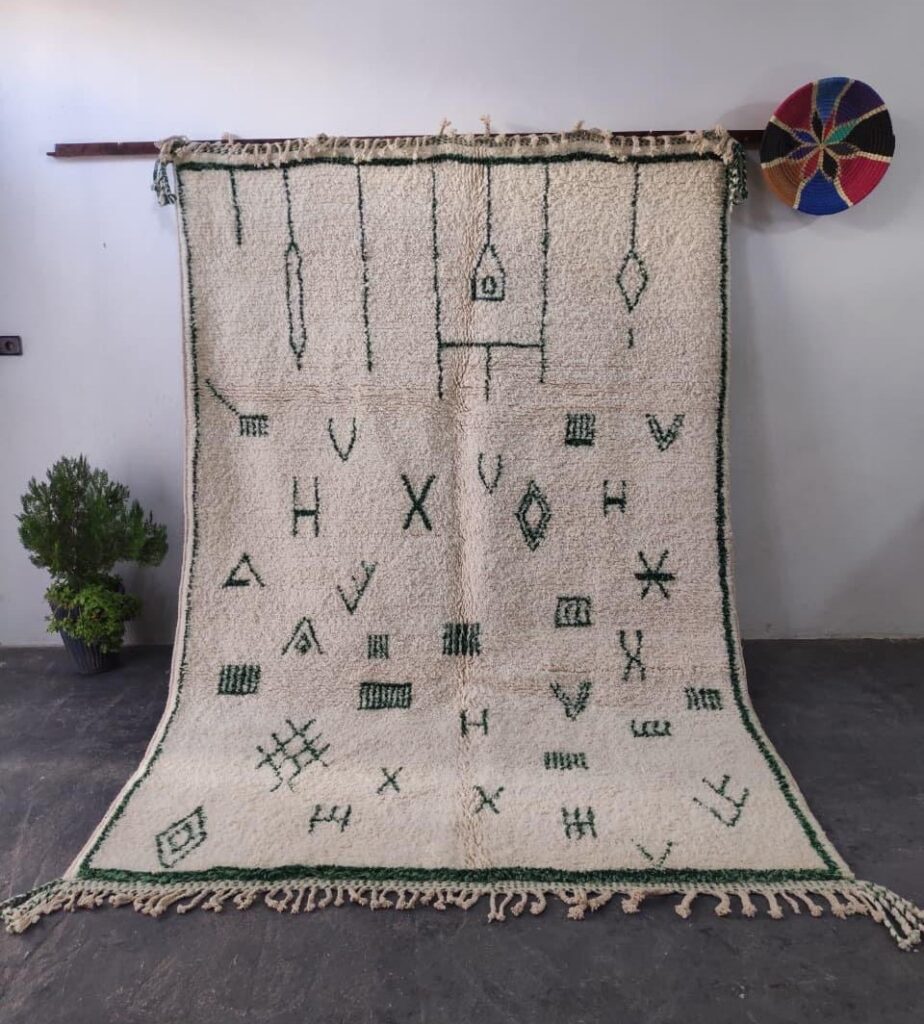


Table of Contents
- Beni Ourain: The Minimalist Classic
- Kilim: The Flatwoven Workhorse
- Boucherouite: The Colorful Statement Piece
- Side-by-Side Comparison
- Which One Fits Your Interior Style?
- Can You Mix Styles in One Home?
- FAQ
Beni Ourain: The Minimalist Classic
Beni Ourain rugs come from the Beni Ourain tribes of the Middle Atlas Mountains and are arguably the most recognizable Moroccan rug style in the world — the rug you’ve seen under coffee tables in nearly every minimalist or Scandinavian-style interior on Pinterest. They’re hand-knotted with a deep, plush pile from thick natural sheep’s wool, traditionally left undyed in its natural ivory or cream tone, with bold black or brown geometric lines running across the surface.
- Construction: Hand-knotted, thick pile, made for warmth — these rugs were originally designed to insulate tents against harsh mountain winters.
- Best for: Minimalist, Scandinavian, and modern interiors where the rug acts as a soft neutral foundation rather than a bold statement.
- Keep in mind: The light, undyed wool shows dirt and scuff marks more visibly than darker rugs, so they suit lower-traffic rooms like bedrooms and formal living rooms better than busy entryways.
Kilim: The Flatwoven Workhorse
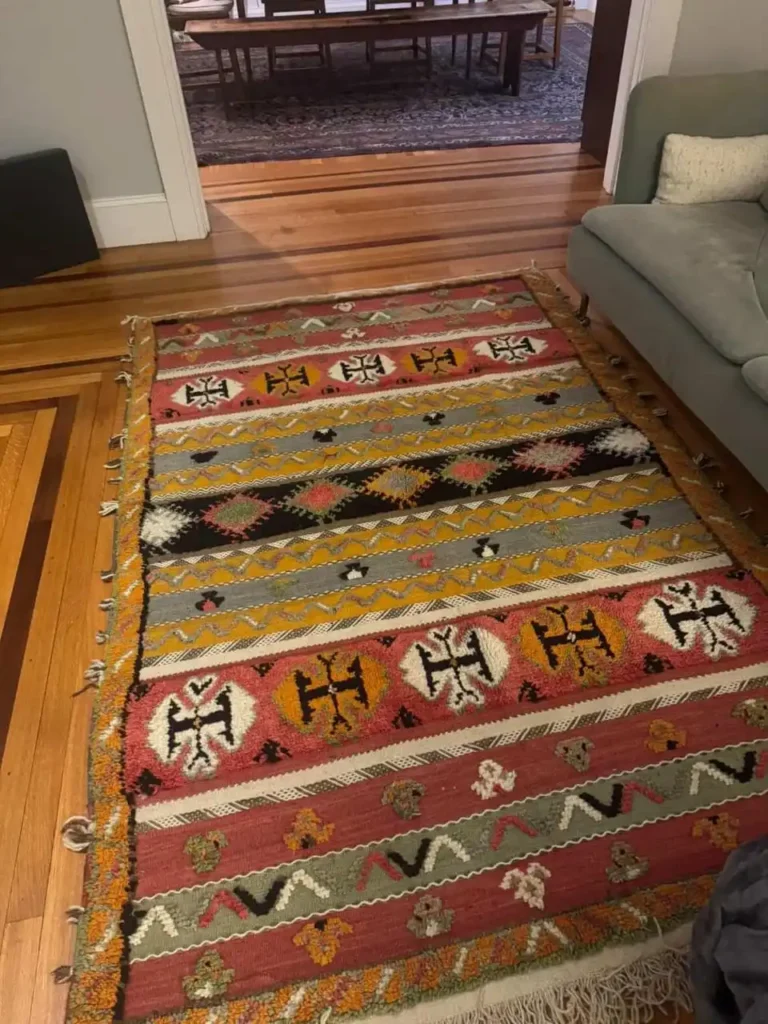
Kilim rugs are flatwoven rather than knotted — instead of individual knots creating a pile, the wool is woven in interlocking horizontal threads, producing a thinner, more durable, and often reversible textile. Originally made by nomadic tribes who needed rugs light enough to pack and carry, and reflecting traditional nomadic weaving practices, Kilims feature bold geometric patterns in warm, saturated colors: deep reds, indigo blues, ochre, and saffron gold.
- Construction: Flatwoven, no pile, lightweight and highly durable.
- Best for: High-traffic areas like hallways, dining rooms, and kitchens, where a thick pile would wear down faster and chairs need to slide easily.
- Keep in mind: Because Kilims have no pile, they offer less cushioning underfoot than a Beni Ourain, but that same flat structure makes them far easier to clean and more resistant to wear.

Boucherouite: The Colorful Statement Piece
Boucherouite — meaning “torn garment” or “scrap” — is the most unconventional of the three. Rather than wool alone, these rugs are hand-woven from recycled fabric scraps, leftover yarns, and textile remnants, a tradition that emerged when Berber women began experimenting with whatever materials were available. The result is bursting with color, asymmetry, and improvised pattern work that no two pieces ever repeat.
- Construction: Hand-loomed from recycled fabric and wool scraps, giving it a tufted, textured surface.
- Best for: Bohemian, eclectic, or maximalist interiors looking for a true one-of-a-kind statement piece, often used as an accent rug rather than covering a full room.
- Keep in mind: The varied, often unconventional materials mean care should lean gentle and low-moisture, similar to other handwoven wool pieces, and these rugs work best as a focal accent rather than in heavy daily foot traffic.
Side-by-Side Comparison
| Feature | Beni Ourain | Kilim | Boucherouite |
| Construction | Hand-knotted, thick pile | Flatwoven, no pile | Hand-loomed, rag-style |
| Color palette | Ivory/cream with black or brown | Warm, saturated reds/blues/golds | Bold, varied, eclectic |
| Best room | Bedroom, formal living room | Hallway, dining room, kitchen | Accent in eclectic spaces |
| Durability | Moderate (shows dirt easily) | High (durable, easy to clean) | Moderate, accent use |
| Interior style | Minimalist, Scandinavian | Bohemian, traditional, transitional | Bohemian, maximalist |
Which One Fits Your Interior Style?
If your home leans toward clean lines, neutral palettes, and a calm, uncluttered feel, a Beni Ourain rug will slot in effortlessly as a soft, textural anchor without competing with anything else in the room.
If you need something for a busy, lived-in space — a hallway, a kitchen, a dining room — a Kilim gives you the color and pattern of a Moroccan rug with the practicality to handle daily wear.
If your style is more expressive, layered, and full of personality, a Boucherouite brings a genuinely one-of-a-kind piece of wearable art into the room, the kind of rug that becomes a conversation starter on its own.
Can You Mix Styles in One Home?
Absolutely, and many of the best-styled homes do exactly that. A neutral Beni Ourain in the living room, a Kilim runner in the entryway, and a small Boucherouite accent (or other tribal weaves like Glaoui, Taznakht, or Sabra) thrown over a reading chair or layered on top of a larger neutral rug is a layout that works because each piece is doing a different job in a different room. The shared thread connecting all of it is the handwoven, Atlas Mountains craftsmanship — the styles complement rather than compete with each other.
FAQ — Frequently Asked Questions
What is the difference between Beni Ourain and Kilim rugs?
Beni Ourain rugs are hand-knotted with a thick, plush pile in neutral ivory and black tones, while Kilim rugs are flatwoven with no pile, featuring bold, saturated colors and patterns. Kilims are generally more durable for high-traffic areas.
Is Boucherouite the same as Beni Ourain?
No. Boucherouite rugs are made from recycled fabric scraps and yarns rather than pure wool, producing a colorful, textured, one-of-a-kind rug, while Beni Ourain rugs are knotted from natural sheep’s wool in a consistent neutral palette.
Which Moroccan rug is best for a high-traffic area?
Kilim rugs are the most practical choice for hallways, kitchens, and dining rooms thanks to their flat, durable weave that resists wear and is easier to clean than a thick-pile rug.
Which Moroccan rug works best in a minimalist home?
Beni Ourain rugs, with their neutral ivory background and simple geometric lines, are the classic choice for minimalist and Scandinavian-style interiors.
Can I use a Boucherouite rug in a busy household?
Boucherouite rugs are best used as accent pieces rather than in constant heavy foot traffic, since the varied recycled materials benefit from gentler, less frequent use than a wool Kilim.
Are Beni Ourain rugs more expensive than Kilim or Boucherouite rugs?
Pricing varies by size, age, and density of weave rather than style alone, though the thick, labor-intensive pile of a Beni Ourain often places it at a comparable or higher price point than a flatwoven Kilim of similar size.
Conclusion
There’s no single “best” Moroccan rug style — only the one that fits the room you’re styling and the look you’re after. Beni Ourain brings calm, neutral texture to minimalist spaces. Kilim brings color and durability to busy, high-traffic rooms. Boucherouite brings personality and one-of-a-kind character to eclectic interiors. Once you know what each one does best, the decision usually makes itself. If you’re ready to take the next step, check out our guide on what size rug do you need to ensure a perfect fit.
Ready to Find Your Match?
Explore our Beni Ourain, Kilim, and full Moroccan rug collections — each piece handwoven by skilled artisans, with free DHL shipping worldwide.